

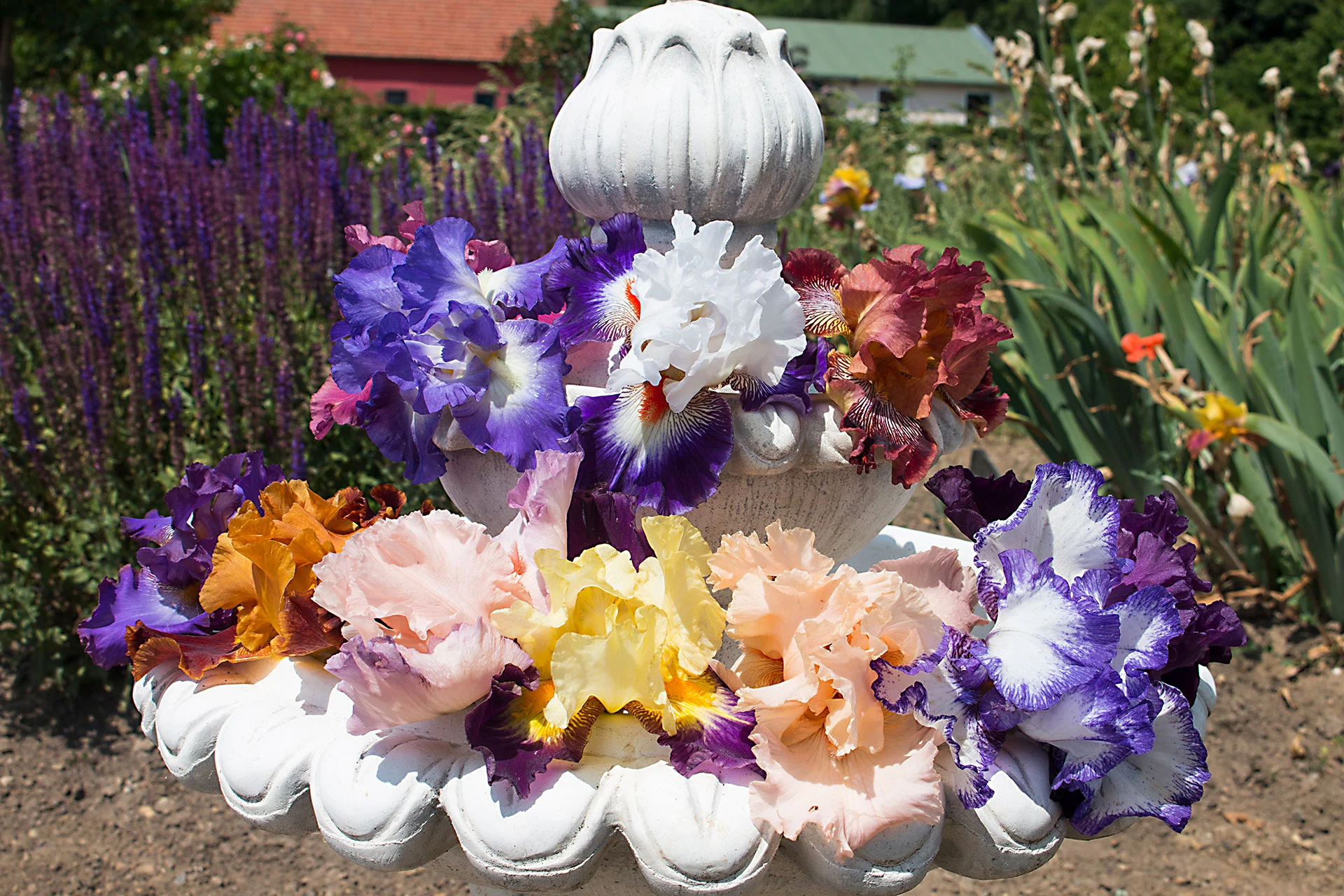
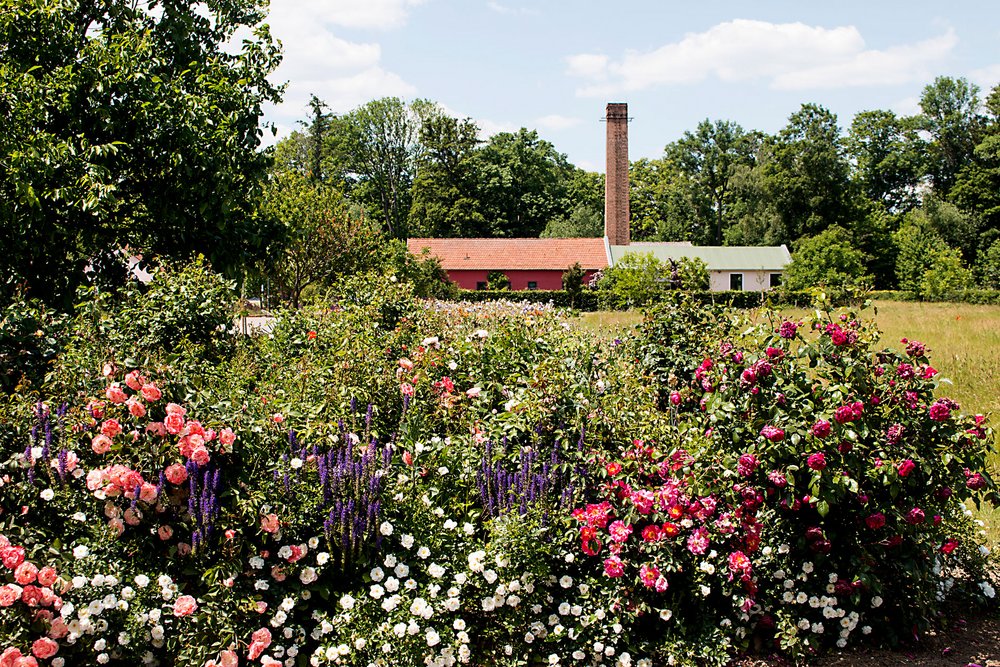
“Irises don’t like wet feet, so Quedlinburg is the perfect place for them,” explains Maya Behrens. Her Mathilde’s Garden lies in the wind and rain shadow of the Harz mountains. The scent of the flowers in the garden is enchanting. More than 1600 different irises, rare roses and local varieties of fruit trees find that the soil and weather conditions in the Harz are ideal.
A “carpet of scent” is mentioned in the history of the town. Maya Behrens has photographs and documents dating back to the time when her garden on Harzweg in Quedlinburg was still known as the Stumpfsburg Garden and was one of the most famous plant breeding and show gardens in central Germany. It belonged to the seed breeding company founded by Heinrich Mette in 1784 and it is said that the scent of the snapdragons, asters, wallflowers, stocks and pinks spread throughout the town during the flowering season. In 1945, the Mette family was dispossessed.
In the period that followed, Quedlinburg became equally famous as the center of garden seed production in the former German Democratic Republic (GDR). The scientific breeding station and greenhouses of VEB Saat- und Pflanzgut Quedlinburg, a state-owned seed and plant company, were based in the Stumpfsburg Garden until 1992. Only the chimney of the boiler house is left to bear witness to this era. But the genius loci, the spirit of the place, can still be felt here. Why else would Maya Behrens, an expert in managing garden shows and dream garden projects who travels throughout Germany, have fallen in love with the overgrown garden? “Here on this ground, which is steeped in tradition, I had the vision of starting my own iris breeding business,” says Maya, who is now in her mid-forties. This was the motivation behind her move from Lower Saxony to Quedlinburg with her two daughters ten years ago.
Original and also exclusive
Since then, her idea of sustainable plant production has flourished, and she has an iris as her company logo. While she enthuses about her love of the iris, the goddess of the rainbow, she chooses particularly beautiful flowers for cutting. It is obvious why the plant has been given this name. Its flowers come in all the colors of the rainbow and present a stunning picture. Landscape designers, fruit growers and gardeners from the region love to visit Mathilde’s Garden because of the impressive collection of irises, the rare roses and the old local varieties of fruit. Here the tradition of the breeding garden has been revived. “Our plants are original and, at the same time, exclusive. Every customer finds something that is just what they are looking for,” says Maya. In almost the same way as in the past, her address attracts customers who want plants that have been selected and bred in real-life conditions. Maya points to the meadows around the garden, which like many in the area have turned brown. Low rainfall, which for centuries was an advantage of the location for seed breeders, could become a problem as a result of dramatic changes in the climate. But Maya does not use hoses to water her perennials and roses growing outdoors. She is aware that drought-resistant plants will be in demand in the future. However, she has her own recipe for healthy, flourishing plants. She talks about her Terra Preta, a black soil that she makes herself. The term Terra Preta was originally used to refer to the fertile black soil of the Amazon region. Maya Behrens’ recipe comes from Mexico, where she was born and brought up. Her parents were teachers from Germany. When it was time for her to go to school, she traveled to Germany and spent the second part of her childhood in her grandparents’ plant nursery in Hanover.
A gardener with a doctorate
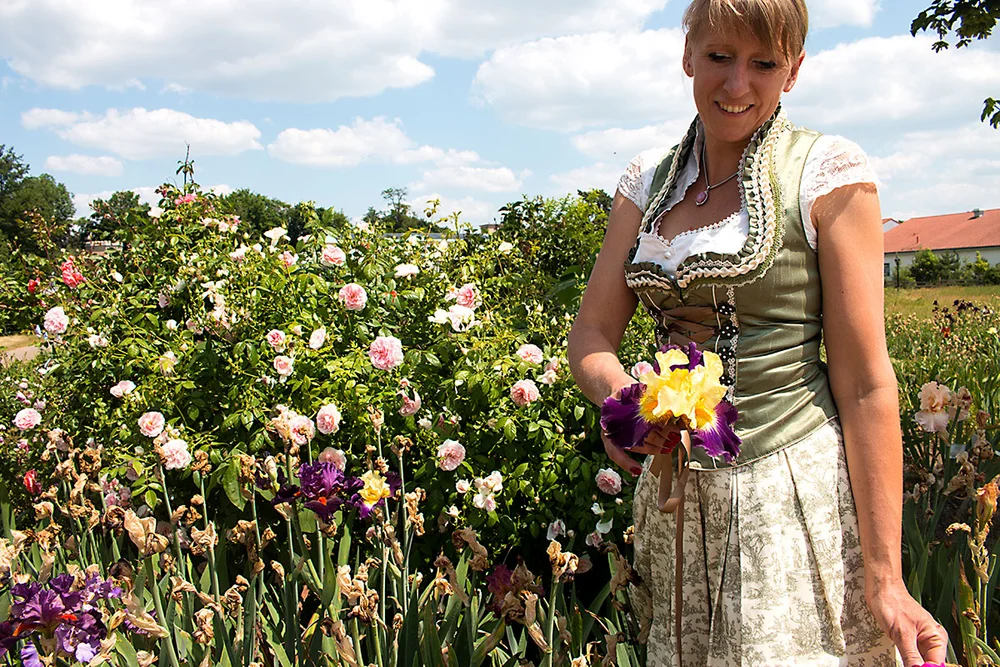
After taking a gardening apprenticeship, she studied economics and business informatics and then completed a doctorate on “evolutionary and collective learning processes in open and closed systems.” At first sight this seems a very abstract subject for a woman who likes getting her hands dirty. However, as lecturer in marketing at the University of Bremen, she linked her theoretical teaching with plenty of practical examples from her grandparents’ nursery. This is how her talent for acting as an intermediary between gardeners and marketing people was discovered. As she looks back over the most recent part of her career, Maya Behrens explains that there was great demand for her services at federal and regional garden shows.
In the tradition of the Quedlinburg endowment for ladies
She regards Mathilde’s Garden as being a continuation of an old Quedlinburg tradition. “All the gardening knowledge in this UNESCO World Heritage town would not have been built up without the noble ladies from the endowment and their gardeners,” she explains. That is why she named her garden after Mathilde. The wife of King Henry I and mother of Emperor Otto founded the Quedlinburg Damenstift, an endowment for noble ladies, in 936 in the town where Heinrich was buried. “There were strong women about even in the Middle Ages,” says Maya. But she only really became aware of this when she moved to Quedlinburg. She laughs because she has strengthened her presence here with a new idea. For the last two years, her café in Mathilde’s Garden has been an additional attraction. While she was talking to customers about her plants, she had the idea of serving them coffee or rose petal tea and, of course, cake. She uses the iris and rose blooms that she has just picked in her amazing cake creations and even surprises herself. “Becoming a baking queen really wasn’t my plan,” she admits.
Sie auch interessieren:
