

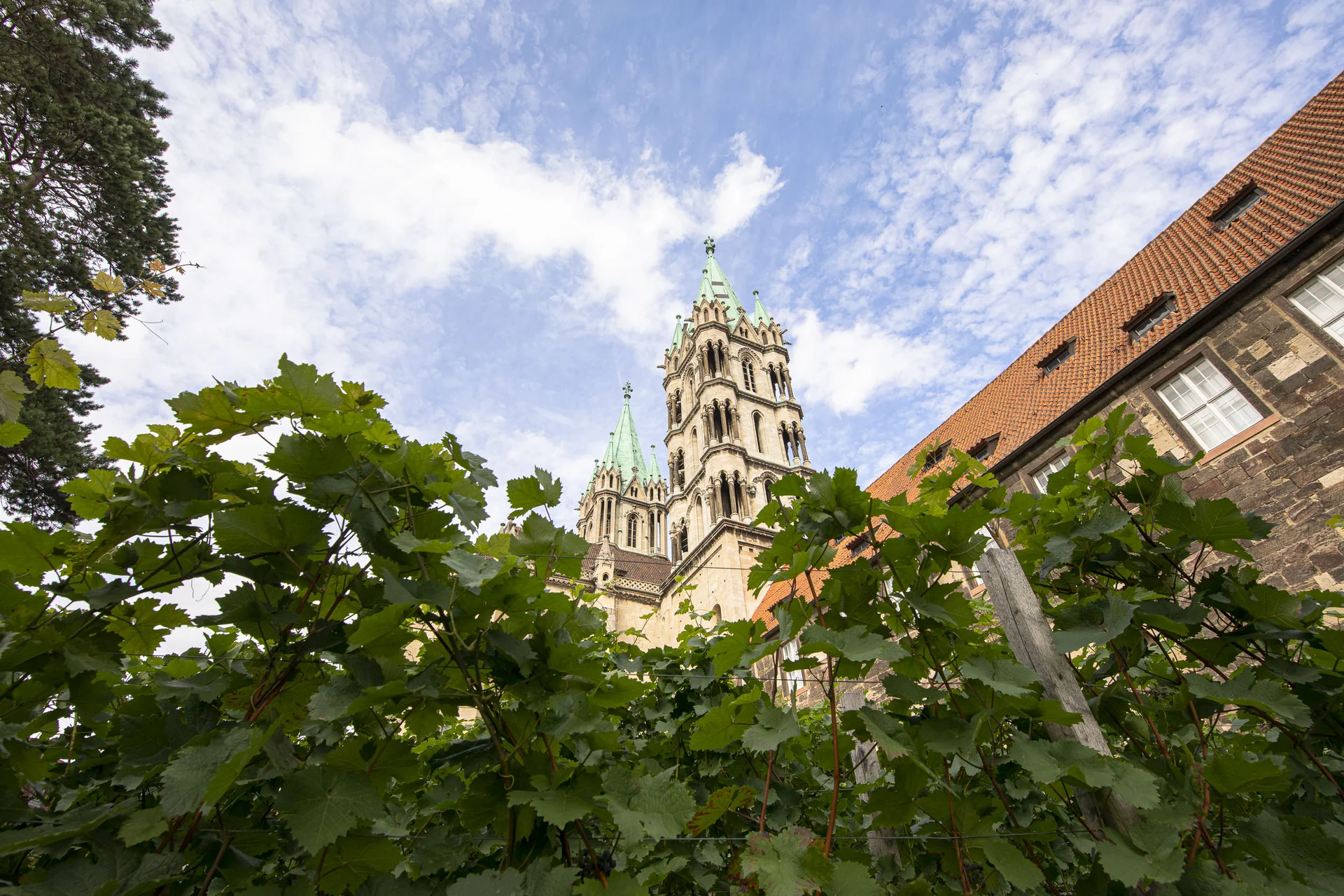
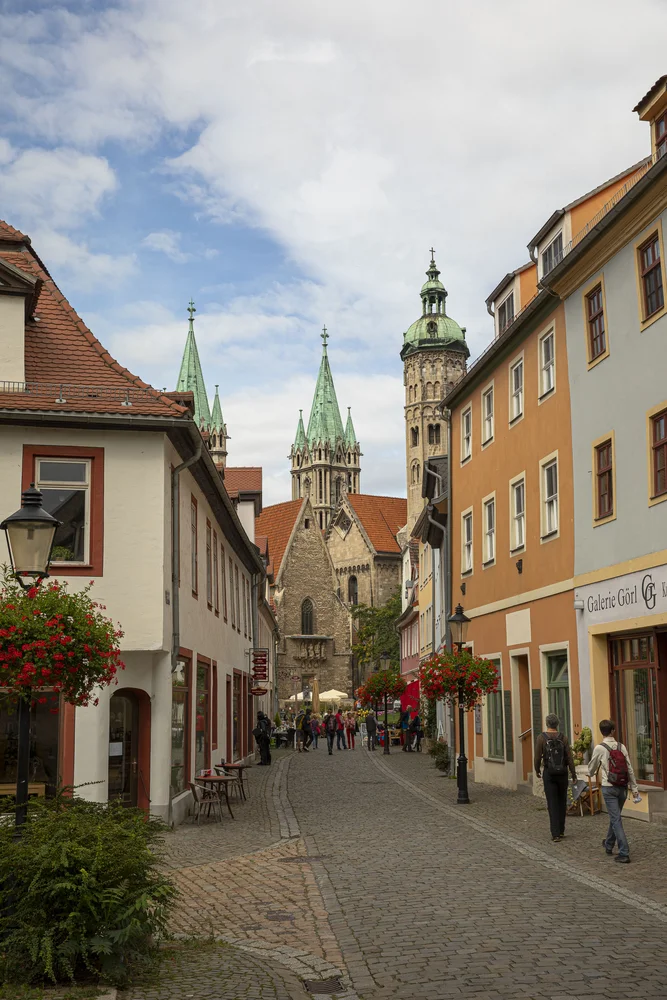
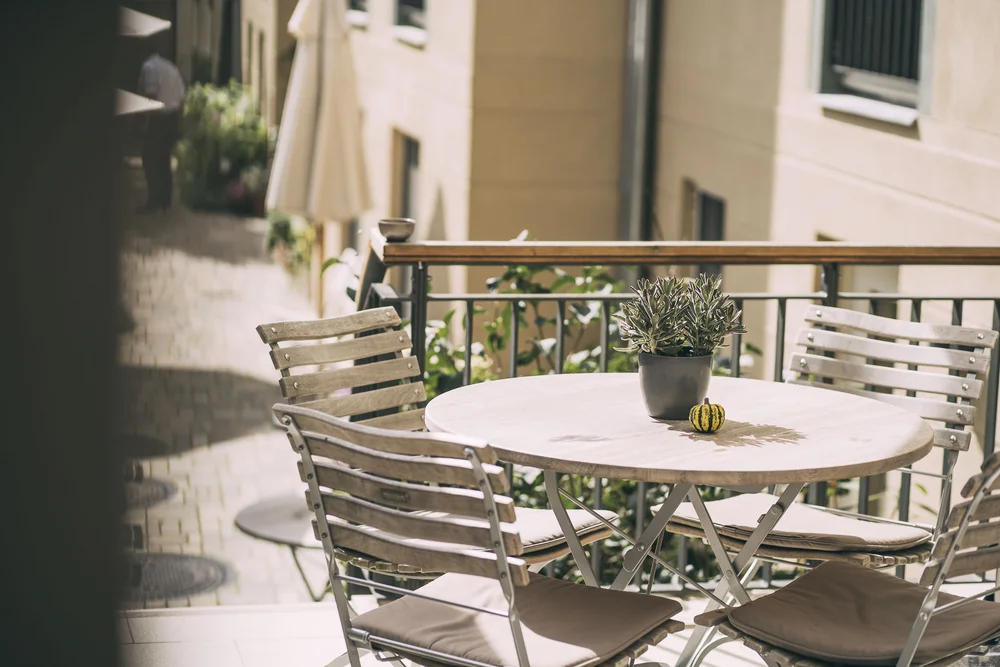
The Gasthof Zufriedenheit in Naumburg (Saale) is only a few hundred metres from the cathedral of St. Peter and St. Paul. While the famous statue of Uta in the cathedral entrances visitors with her grace, the restaurant inspires them with sophisticated cuisine. Good food and wine plus World Cultural Heritage sites are a combination that attract tourists to the Saale-Unstrut region from far and wide.
Visitors do not need to ask the way to Naumburg’s main landmark. They can find it unaided. The impressive tower of the cathedral of St. Peter and St. Paul can be seen from a long way off. And in the town itself, busy Steinweg leads directly to the cathedral door.
“Our aim is to treat all our guests as individuals. Our focus is on our ambitious menu.”
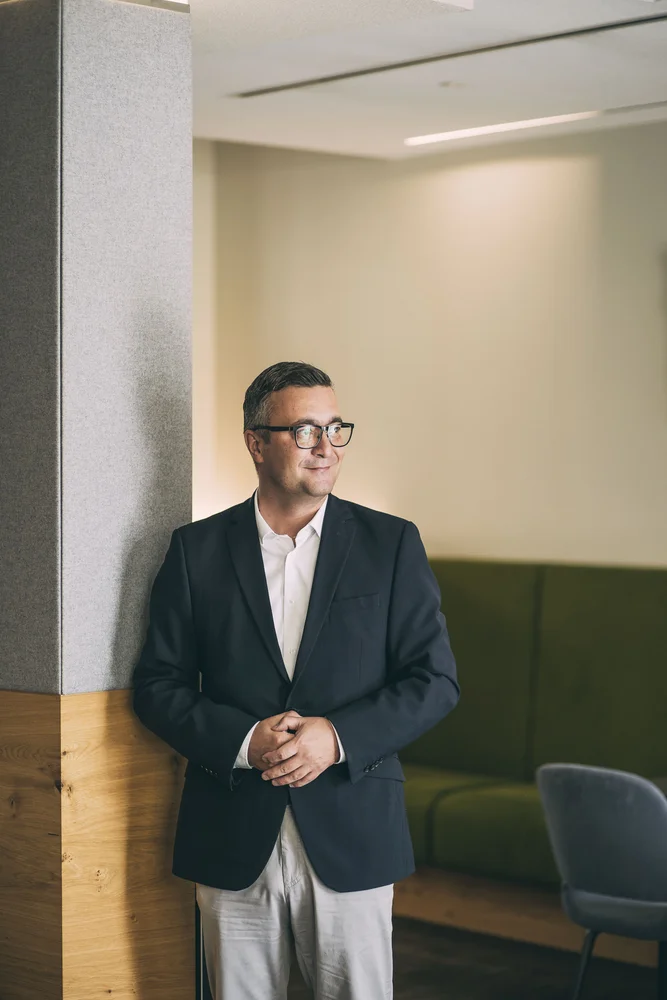
On Steinweg, only a few hundred metres from the cathedral, is the Gasthof Zufriedenheit, a hotel and restaurant with a name that means “contentment”, which is both a promise and an obligation. “We are a small boutique hotel and so our aim is to treat all our guests as individuals. Our focus is on our ambitious menu,” says director Matthias Albrecht, pointing to the door of the hotel kitchen.
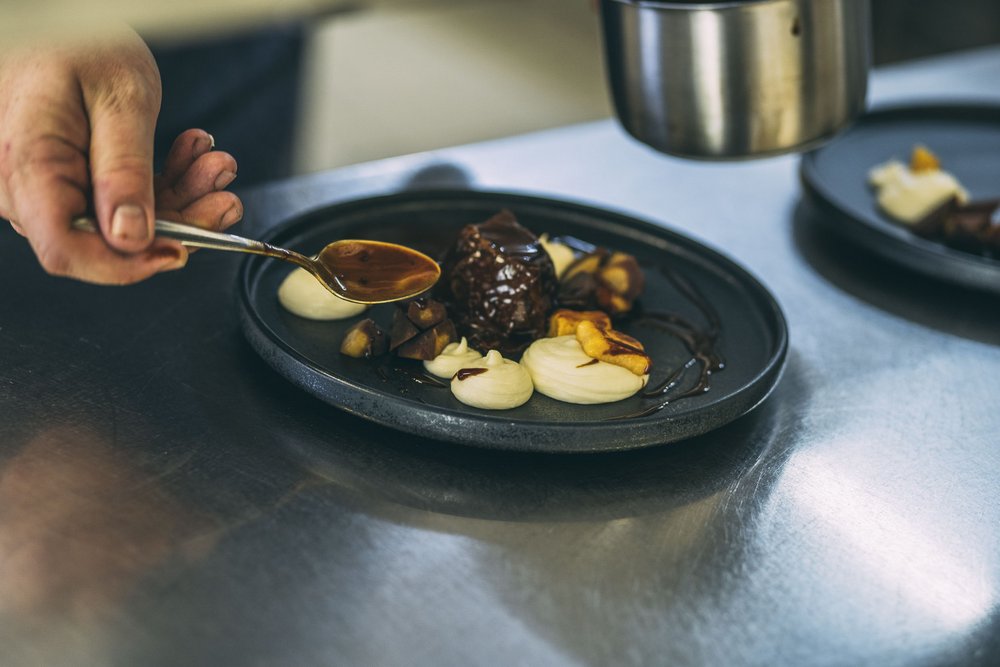
Behind the door, you can hear sizzling and bubbling sounds and the occasional clatter of pans. This is where head chef Alexander Frömel and his team conjure up wonderful dishes in the space of just a few square metres. Their creations include braised ox cheek with parsnips, black salsify and sweet potatoes and catfish fillet with courgettes and herb potato purée, accompanied by a Pommery mustard sauce.
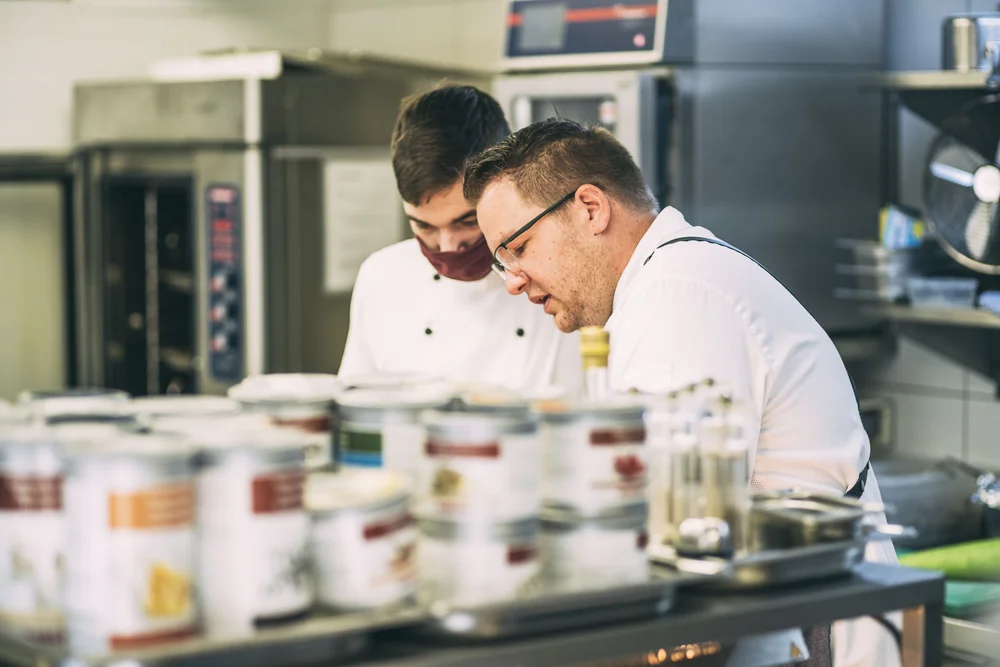


“We try to source as many of our ingredients as possible from the local region. For example, the catfish fillets and the Duroc pork come from the area near Naumburg. It means that we make efficient use of resources and it gives our dishes an authentic character,” says Albrecht. It is this philosophy that has led to the Gasthof Zufriedenheit receiving multiple awards in the renowned Gault Millau restaurant guide. And, of course, carefully selected wines from the Saale-Unstrut region feature on the hotel’s wine list. The wine-growing region is the second smallest and the most northerly in Germany.
“We try to source as many of our ingredients as possible from the local region.”


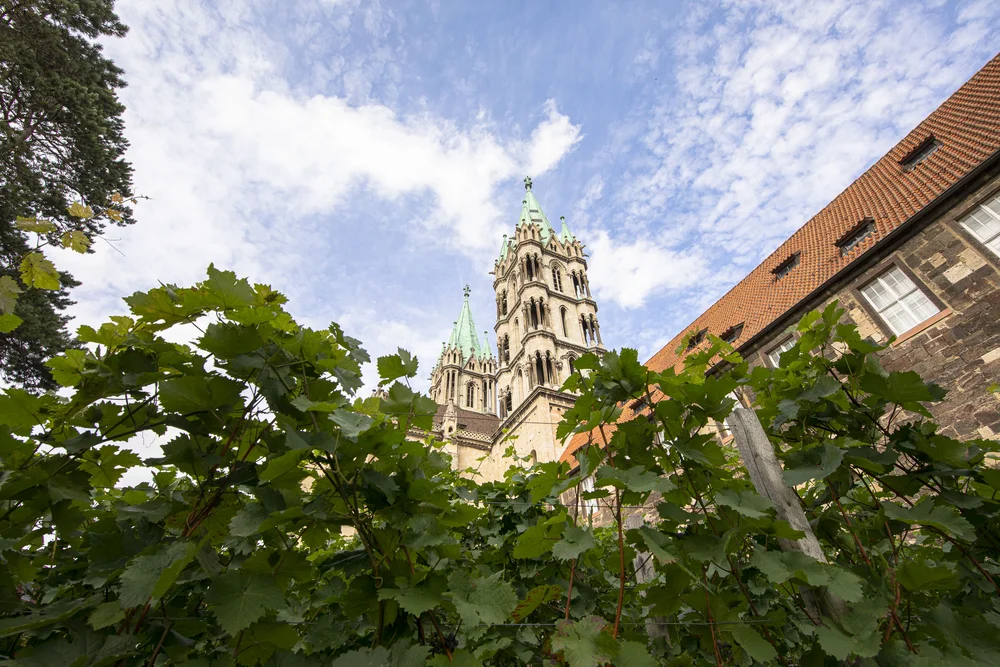
The inclusion of Naumburg cathedral on the list of UNESCO World Cultural Heritage sites in 2018 attracted visitors from a wider range of countries to the town. “The visitors have become more international. We have noticed that our guests are increasingly coming to us from the Netherlands, the UK and Poland,” says Matthias Albrecht.
Cyclists in particular enjoy visiting the region around the Saale and Unstrut rivers. Steep terraces, old dry stone walls, romantic houses set in vineyards and picturesque river valleys characterise the area, which is also known as the Tuscany of the North.
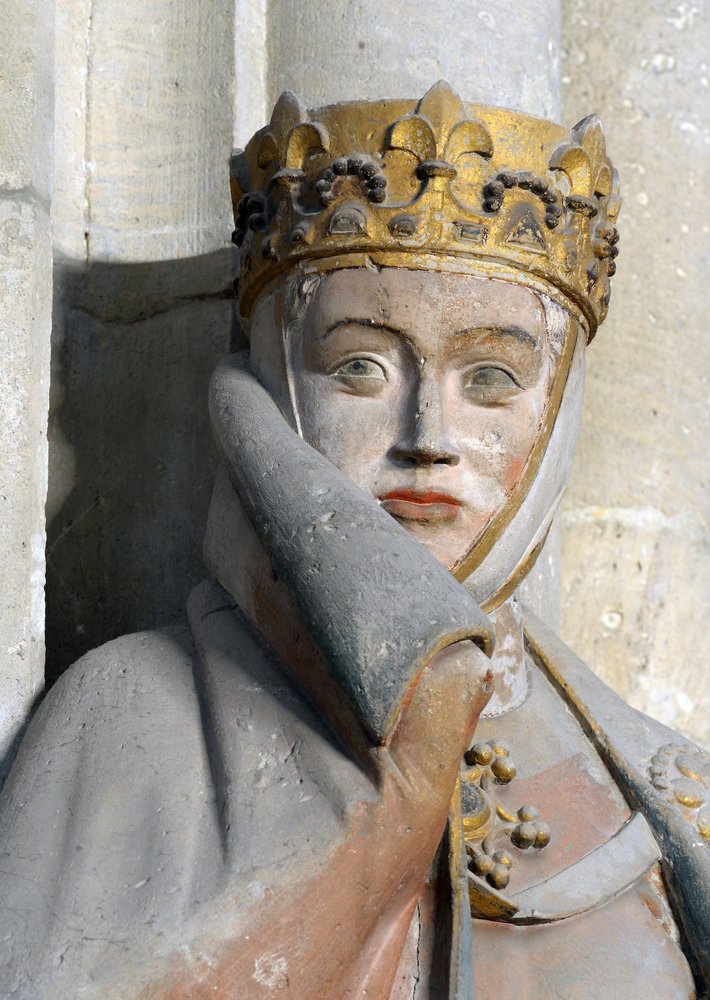
But visitors come to Naumburg cathedral primarily because of the woman whose proud and graceful features have made her famous throughout the world. This is Uta of Naumburg, one of the twelve founder figures in the west choir of the cathedral. The Uta figure shows no outward signs of emotion. She represents mastery of the world of feelings and therefore perfectly embodies the role of the aristocracy in the Middle Ages. Her image has fascinated and inspired people for centuries. Walt Disney used her as the model for the wicked queen in the film Snow White. And the famous author Umberto Eco was also captivated by her charisma.
“The appeal lies in the broad spectrum of artworks from medieval through to modern”
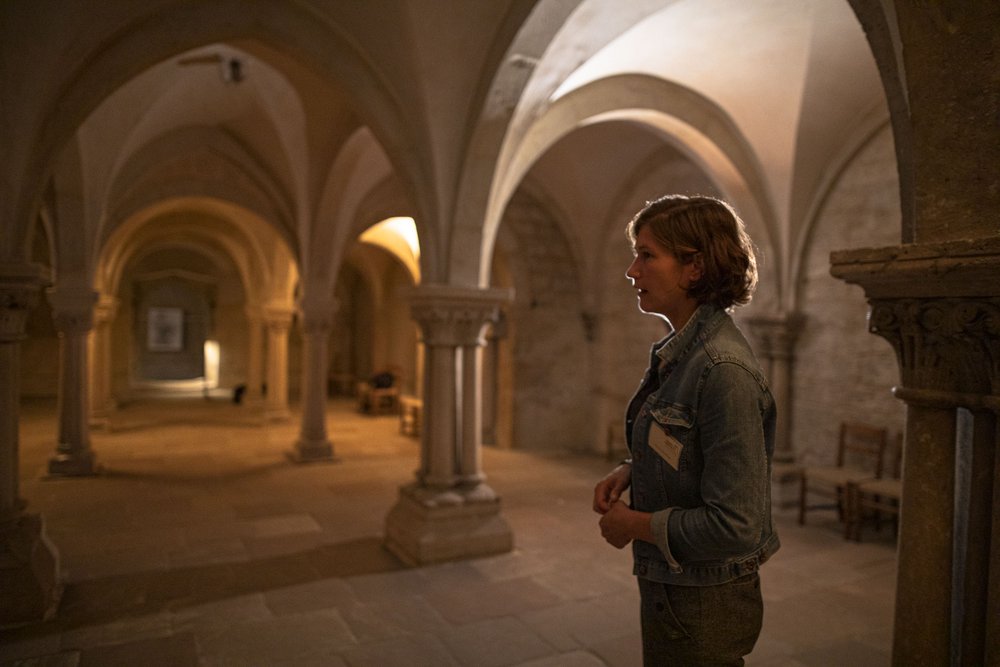
But Naumburg cathedral has much more to offer. “Uta is definitely the reason why many people visit. But the 150,000 or so visitors who come here every year have the chance to experience much more. The appeal lies in the broad spectrum of artworks from medieval through to modern,” says Kirsten Reichert, head of the visitor service at Naumburg cathedral. It is not only Uta herself who is shrouded in mystery, but also the creator of the founder figures. His name is unknown, which is why he is simply referred to as the Naumburg Master. He designed the west choir in Naumburg in the 13th century and his work, with its unique combination of architecture, sculpture and glass painting, also impressed the UNESCO World Heritage committee.
There is a memorial to another woman from the Middle Ages in the cathedral. In the Elisabeth chapel is the oldest stone carving of St. Elisabeth of Thuringia. The benefactress inspired the Leipzig painter Neo Rauch who reproduced three scenes from her life in shades of ruby-red for the windows of the chapel.
In the cathedral treasure vault, precious items such as altars, panel pictures, documents and manuscripts from the Middle Ages and the Renaissance are on display.
Sie auch interessieren:
