

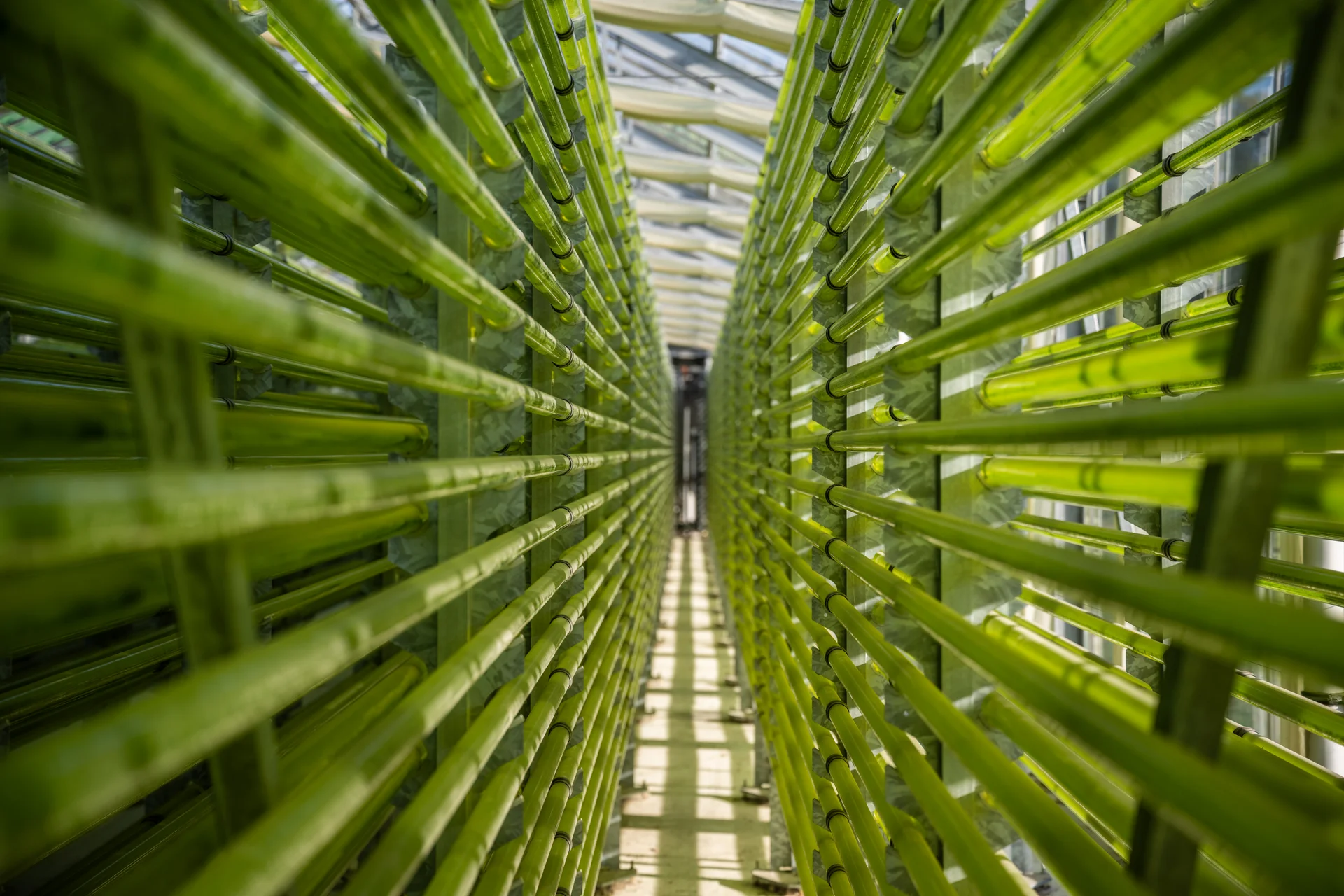
The small town of Klötze in the north of Saxony-Anhalt is home to Germany's largest algae farm. Microalgae are very versatile and can help to solve some of the urgent problems facing humanity.
(Kopie 3)
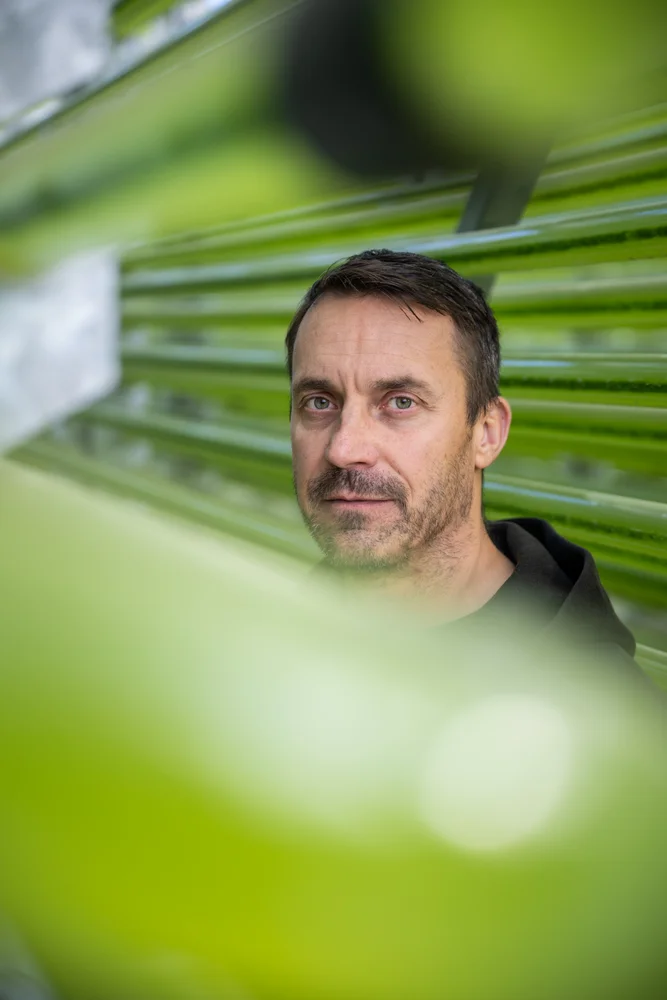
Partridges are running about in the field on the company site and birdsong can be heard through the open office window, but there is no traffic noise. Jörg Ullmann, who is a biologist, sits at his desk and looks out at the countryside. “You simply would not find this quality of life in a big city,” he says, referring to his workplace in the Altmark region. He is the managing director of Algenfarm Klötze, an algae farm where microalgae have been cultivated since 2000. There have been many developments in the field of algae in recent years, for example in research, production and marketing.
„You simply would not find this quality of life in a big city.“
Although Jörg Ullmann lives and works in an idyllic rural setting, he has a clear, analytical view of the world market and believes that there is need for action on the subject of algae. “Although I have been working with algae for more than 20 years, I feel like a pioneer in the field and always seem to spend a lot of time convincing people of their value. Microalgae have huge potential and the market for them is highly promising. But more investment in research is needed in Germany and in the rest of Europe and the investment process must be made less complex. In addition, a clear strategic focus on the industrial production of algae is essential, otherwise other countries will get a head start on us,” explains Ullmann. It is no secret that algae will be extremely important in the future. For example, Saudi Arabia has set itself the target of becoming the world’s largest producer of algae by 2030. Industry in the USA, China and Brazil is also focusing increasingly on the algae market. “We need to be aware that other parts of the world are taking a more dynamic approach,” says Ullmann, with some concern.
(Kopie 6)
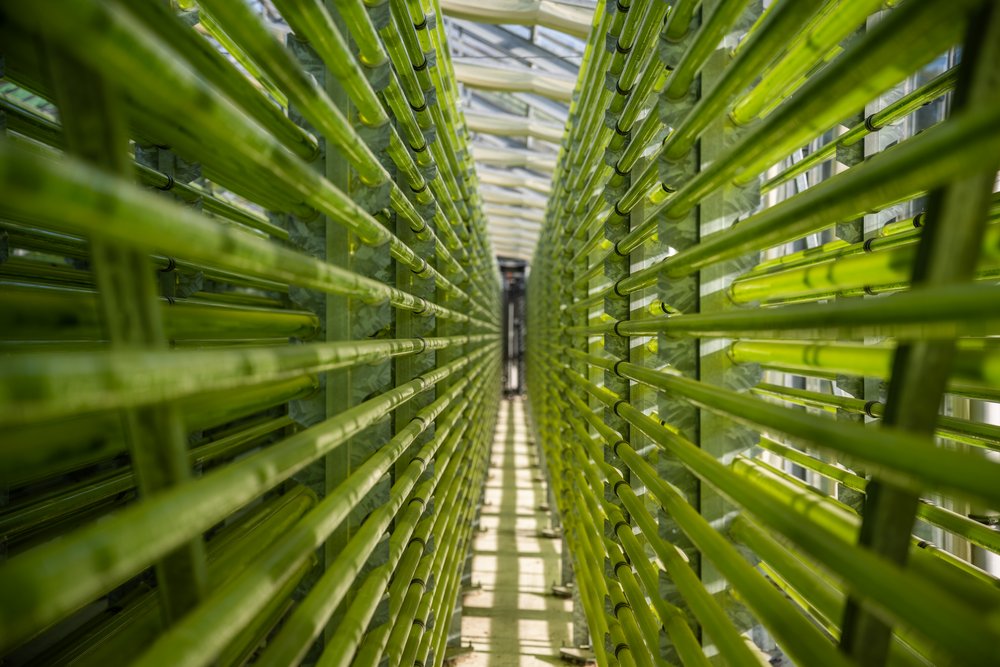
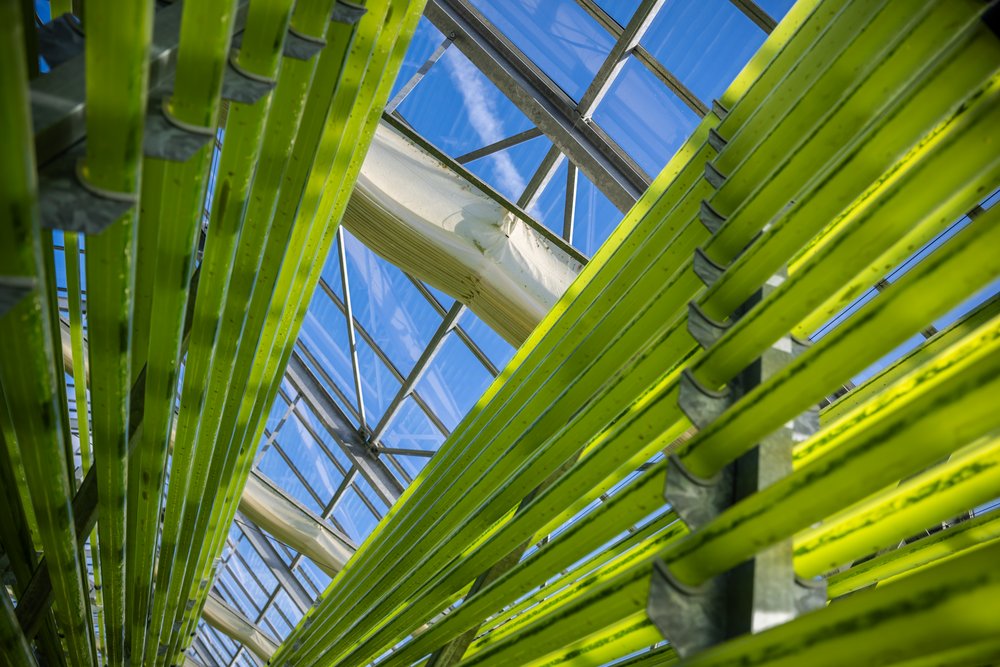
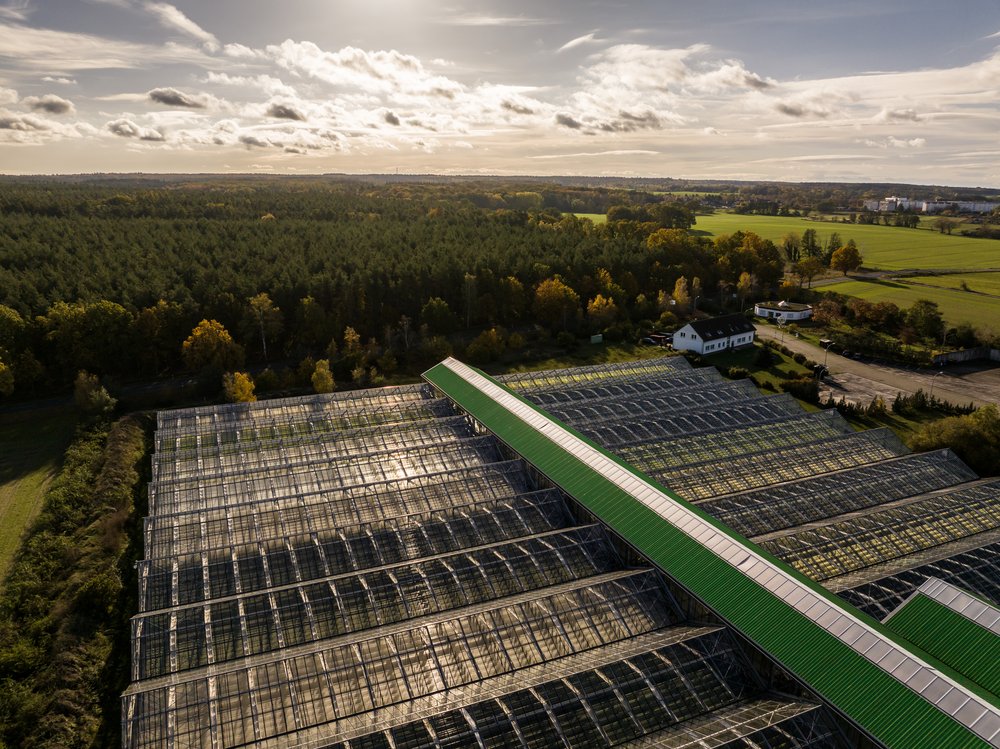
Algea farm in Klötze
„Microalgae have huge potential and the market for them is highly promising. But more investment in research is needed in Germany and in the rest of Europe and the investment process must be made less complex. In addition, a clear strategic focus on the industrial production of algae is essential.”
The high protein and vitamin content of algae makes them ideal as an additive in the food industry. They could be used as a substitute for eggs and butter, for example. As the global population grows and an increasing supply of food is needed, it is obvious that algae will become much more important.
Algae are also in demand as additives in animal feed, cosmetics and paints. Research projects are currently investigating the use of algae as fibers in the textile industry and as a synthetic substitute for crude oil. Algae have the potential to replace fossil raw materials in many different areas.
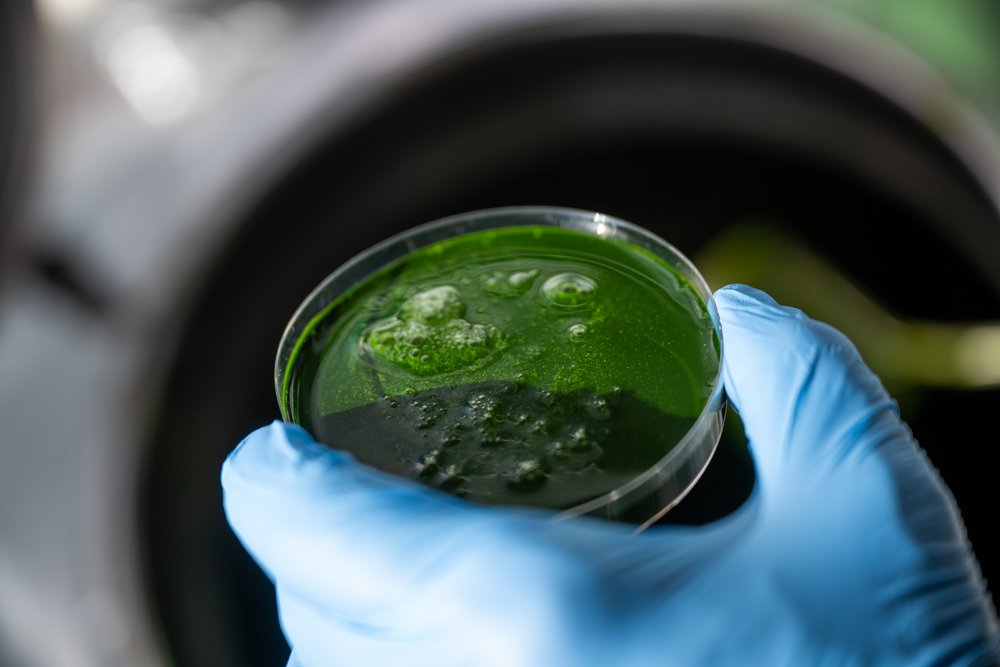
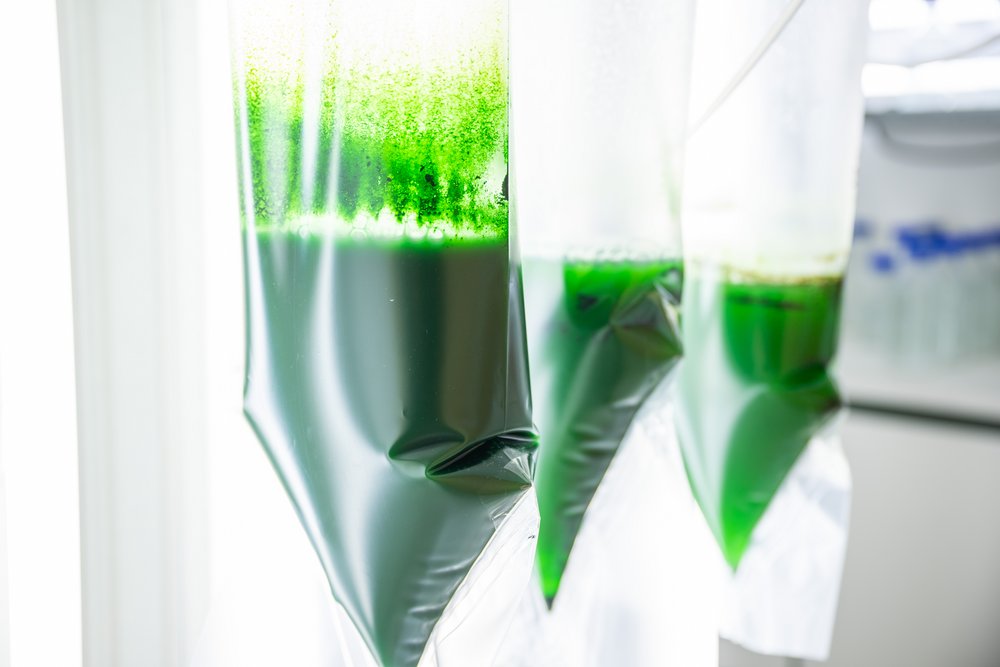
Algenfarm Klötze is one of the few manufacturers in Germany to produce the green algae Chlorella as a food additive, using a highly innovative system of glass tubes that is 500 kilometers in length. The microalgae grow in fresh water and are ready to harvest after only a week. The company produces around 50 metric tons of algae each year and supplies its end product, which is in powder form and goes under the brand name Algomed, to areas s far away as Asia. The production of the algae in glass tubes guarantees a top-quality product, as no contamination can make its way into the enclosed system. This gives the process a clear advantage over the conventional cultivation method in open pools.
Jörg Ullmann currently employs 16 people in production, the laboratory, dispatch and administration. Algenfarm Klötze also works closely with other algae producers, such as the Burgscheidungen agricultural cooperative in the south of Saxony-Anhalt and the German algae cooperative, an association of growers in northern Germany.
(Kopie 11)
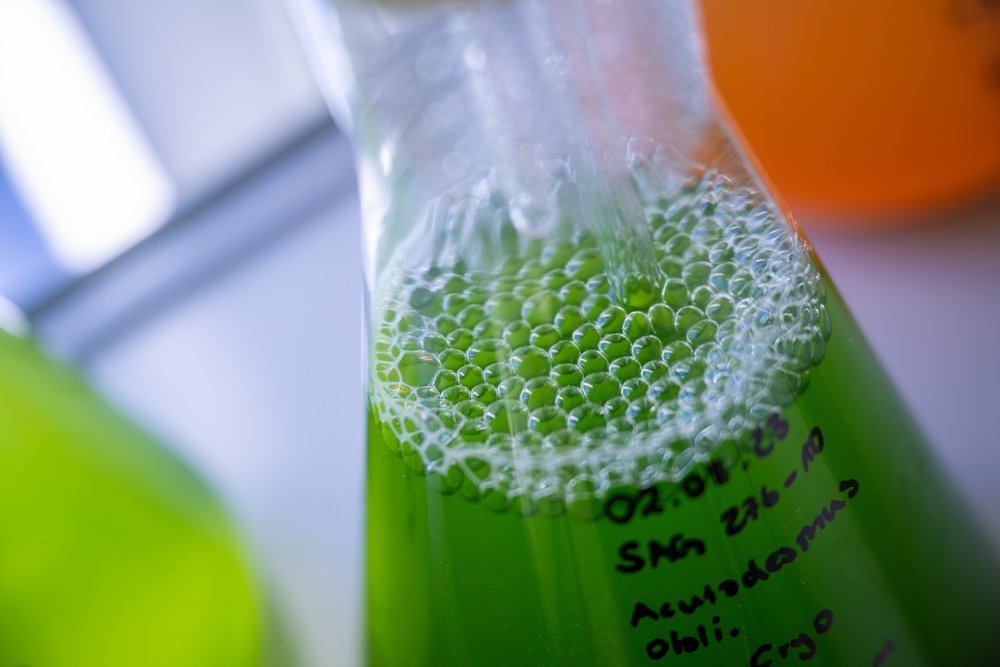
„Algae have the potential to replace fossil raw materials in many different areas."
(Kopie 16)
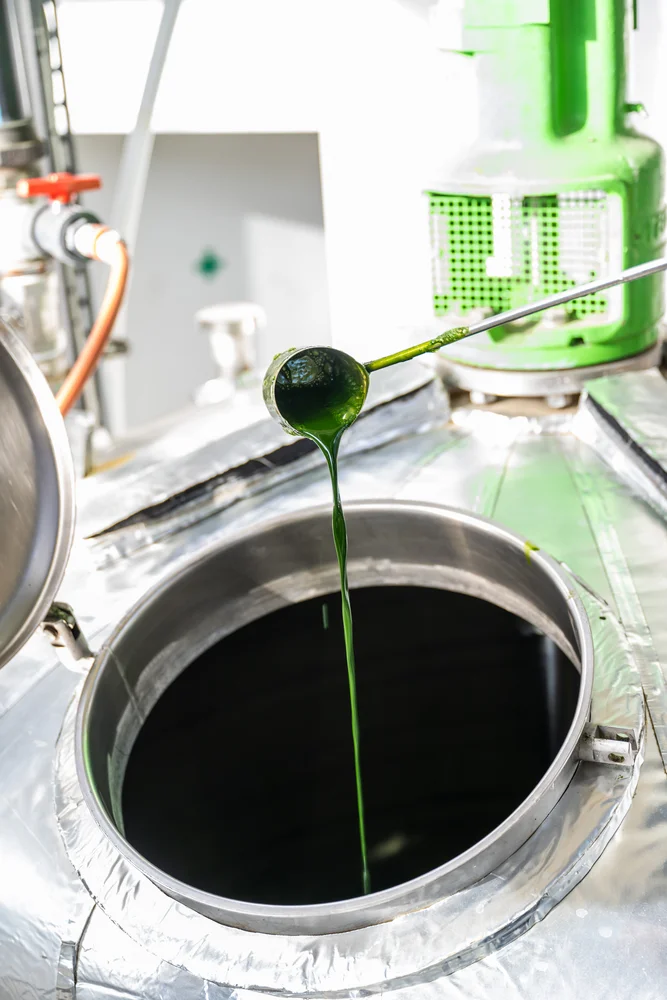
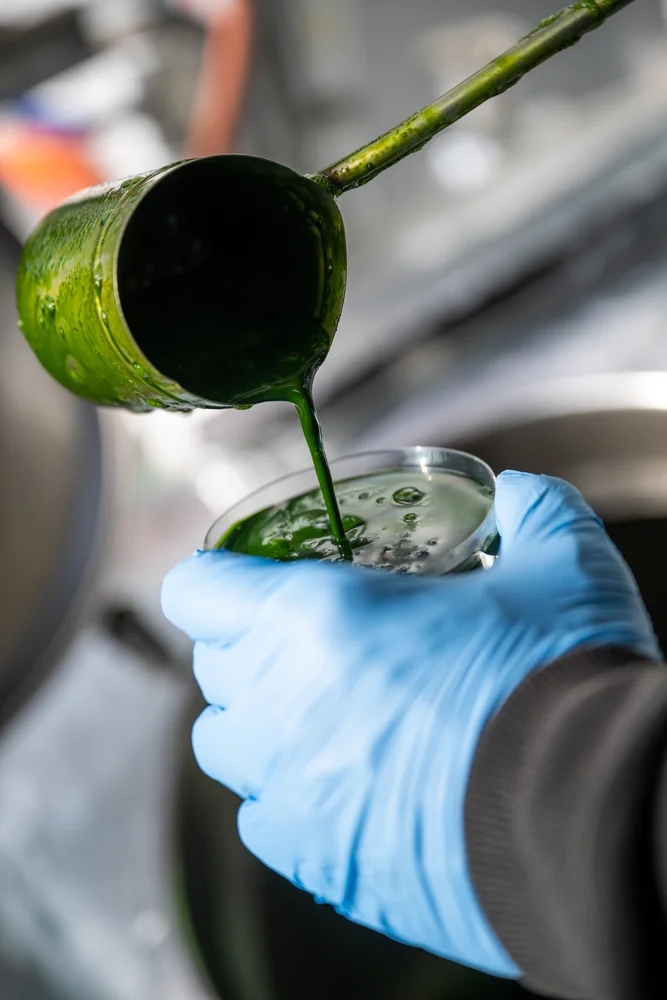
In Europe, Saxony-Anhalt plays a leading role in the field of research into the use of algae in food and medicines and as a fuel. For example, the Competence Center for Algae Biotechnology and the Center for Natural Product-Based Therapeutics at Anhalt University of Applied Sciences have been carrying out research in this area for many years. In the future, the central German algae center will function as an innovation cluster. It will promote dynamic growth in the algae sector and ensure that it is an important feature of the bioeconomy in Saxony-Anhalt.
Although Jörg Ullmann’s office is in Klötze, he is not only in demand in Berlin, Paris and Brussels, but also receives invitations to visit Brazil, Saudi Arabia and the USA as an algae ambassador.
He has an interesting proposal for helping algae production to make its big breakthrough in Europe: “An interim algae quota of three to five percent in fish feed would be very helpful. Then there would automatically be a market of a certain size and guaranteed sales, which would make it worthwhile for investors to put their money into large production plants. A regulation of this kind could also make fish production more sustainable, as the manufacturing of fish feed uses a large amount of energy,” explains Jörg Ullmann. He is sure about one thing. “We are still in the early days of algae production. When you consider that two-thirds of the earth's surface is covered with water, that represents an unused agricultural area. The use of algae is only just beginning.”
Sie auch interessieren:
