

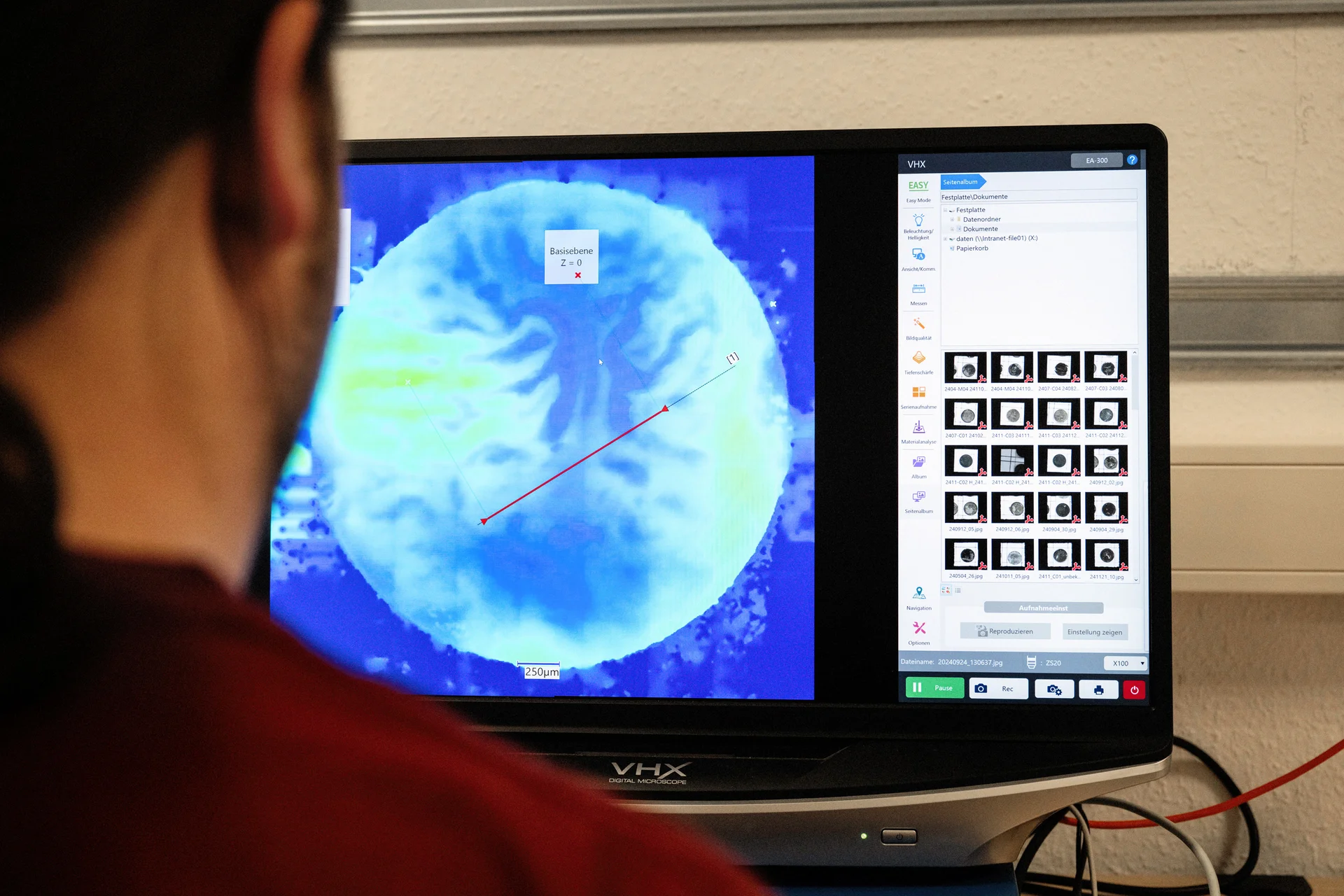
Based in Halle (Saale), the start-up NorcSi has developed a battery anode that could mark a real breakthrough in battery technology.
(Kopie 3)
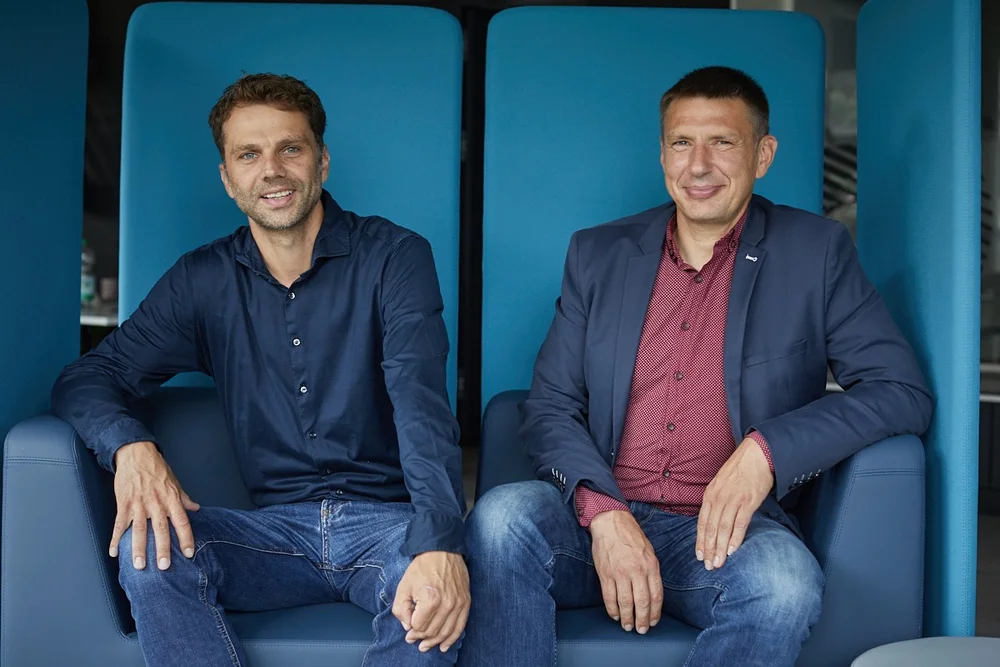
Imagine driving an electric car from Halle (Saale) all the way to Flensburg and back without having to stop once to recharge. What sounds futuristic is already within reach in the NorcSi lab. Building on an interdisciplinary research project carried out at Helmholtz-Zentrum Dresden-Rossendorf (HZDR) and Freiberg University of Mining and Technology, founders Udo Reichmann and Dr. Marcel Neubert carried the idea forward to create a scalable material, establishing NorcSi in 2020 at Weinberg Campus Technology Park in Halle (Saale).
"The awareness that silicon has better properties than graphite isn’t new. The problem has always been that its material characteristics have made it impossible to use in industrial battery production."
NorcSi’s approach amounts to a paradigm shift in lithium-ion battery production. Instead of graphite, the company uses silicon for the anode. The advantages are obvious: silicon has ten times the storage capacity, enables higher charge and discharge rates, and makes batteries smaller and lighter with the same energy content. On top of that, silicon is cheaper than graphite and available worldwide.
“The awareness that silicon has better properties than graphite isn’t new. The problem has always been that its material characteristics have made it impossible to use in industrial battery production,” says physicist Dr. Marcel Neubert. “When charging and discharging, the volume changes dramatically – it behaves like a kind of natural sponge. Since the silicon has to be applied in a thin layer on a copper foil, it would peel off again after just a few cycles.”
(Kopie 6)
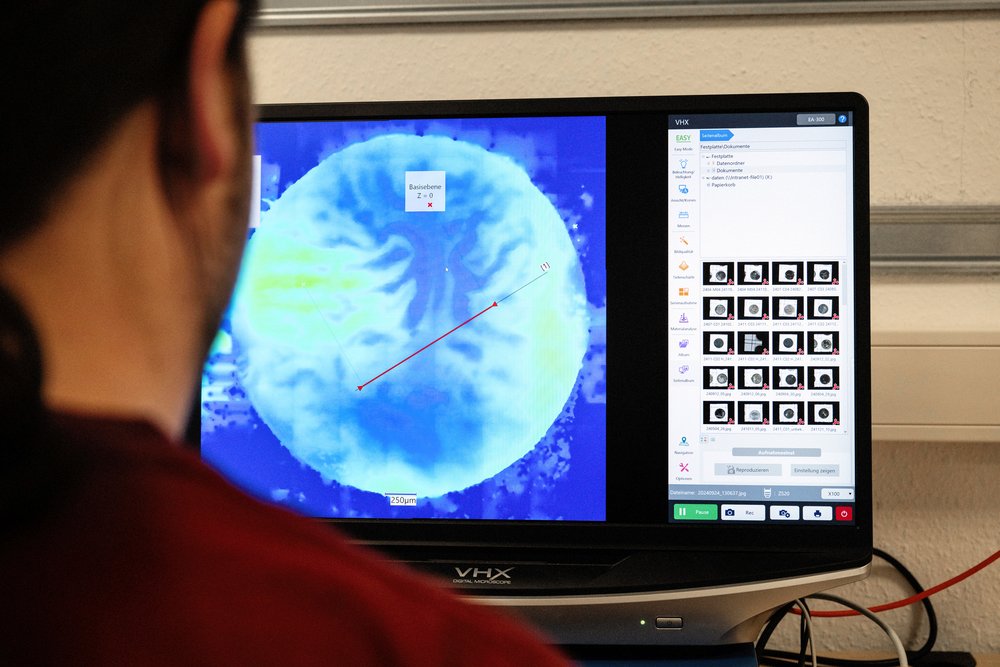
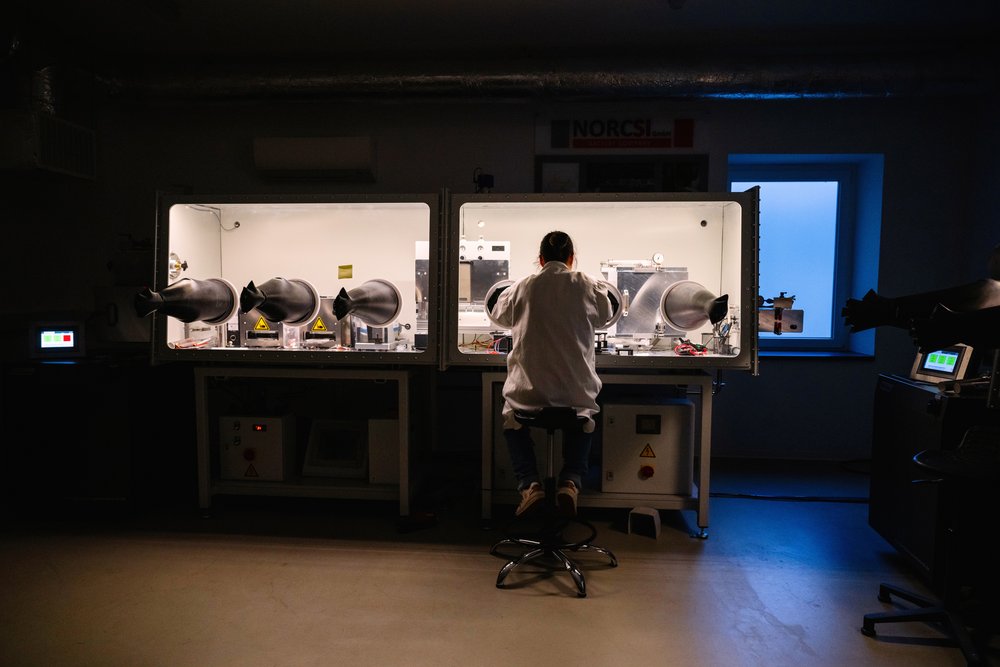
NorcSi GmbH Halle (Saale)
A one-of-a-kind solution
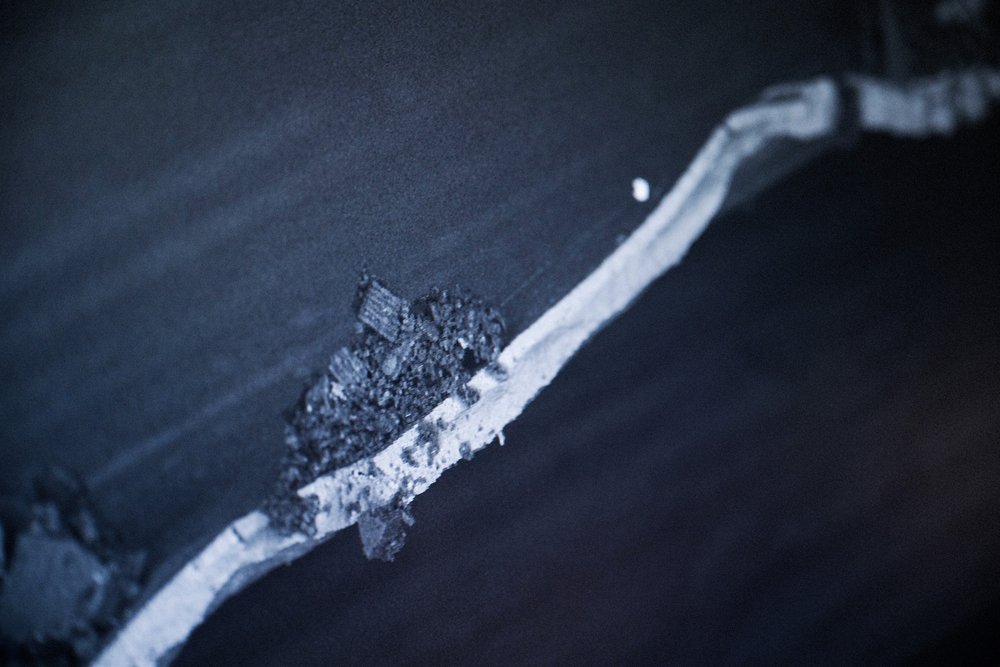
This is where NorcSi’s solution comes in. In order to bond the silicon firmly to the copper foil, the structure is changed using flashlamp technology. A current of several kiloamperes runs through the lamp for a millisecond, creating an intense burst of light that heats and then cools the surface almost instantly. The process produces a unique nanostructure that tightly binds copper and silicon together. “This is the first time anything like this has ever been done anywhere – a genuine differentiator,” says Reichmann. “It offers a promising way to get silicon onto copper foil in a sustainable, economical way. We’ve optimized the nanostructure to the point that we’re already hitting record levels in terms of capacity and charge rate under lab conditions.”
In 2024 the start-up received the IQ Innovation Award Central Germany for its technology.
NorcSi is currently working on scaling up: the next step is to transfer the process to roll-to-roll production on standard carrier foils. If that succeeds, nothing will stand in the way of industrial-scale silicon anodes – a change that could upend the battery market. The new technology could be in use within just a few years in everything from hearing aids to electric cars. “All things being well and if we work flat out, I can imagine that happening in three to four years’ time,” says Reichmann confidentl
(Kopie 11)
From Halle (Saale) to the whole world
R&D teams around the world are working to boost battery performance, and carmakers are no exception. “All the automobile manufacturers are pursuing this too, of course – everyone wants to be the one to make the breakthrough. We’re in talks with the major companies to explain our technology and keep them up to date on our progress. It’s an arduous path that takes a lot of small steps. But the fact is that if you can’t build good batteries, you won’t be able to sell electric cars in the future,” says Marcel Neubert.
The stakes are high: 90 percent of the world’s graphite production is in China. The issue has long become geopolitical, with major implications for the long-term viability of the German and European automotive industries.
Excellent conditions for growth
(Kopie 16)
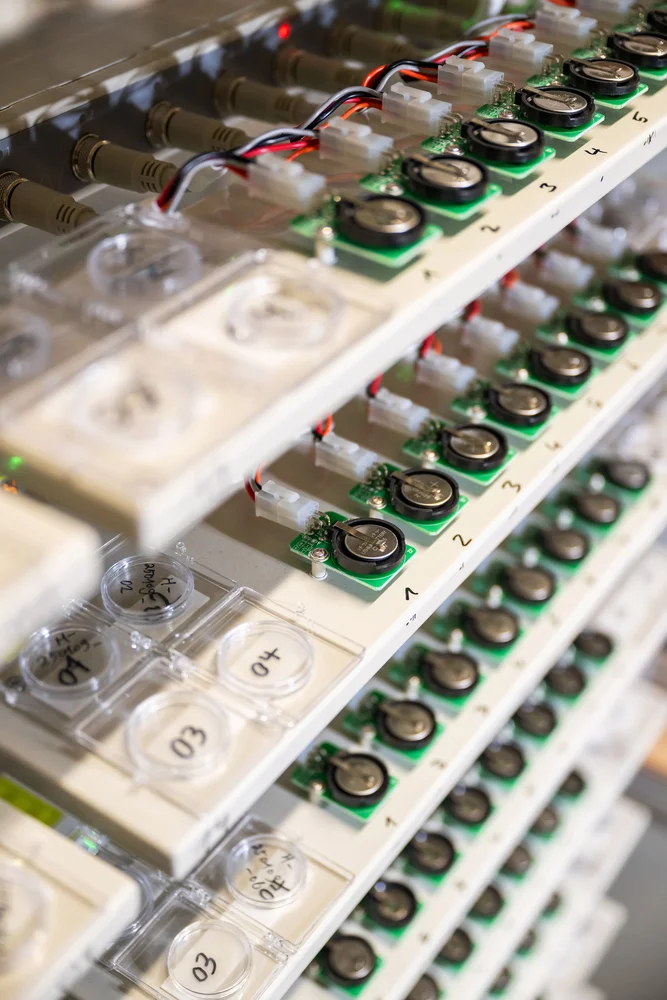
With just 14 employees, NorcSi is a fast mover in this field. The founders deliberately opted for Weinberg Campus Technology Park as their base. “We have ideal conditions for our labs and pilot facility here, and we’ve been able to recruit much of our team from among the research community in Halle (Saale), especially through our cooperation with Martin Luther University Halle-Wittenberg,” Reichmann explains.
Weinberg Campus is the largest science and research hub in Central Germany, focusing on life sciences, biomedicine and materials science. More than 100 companies and institutes are based there with a total of some 6,000 employees.
Despite the huge momentum in the race for the future of energy storage, the NorcSi founders are confident that if an electric car can drive 1,000 miles on a single charge in four years’ time, it will be thanks to a NorcSi silicon anode.
Sie auch interessieren:
