

(Kopie 4)
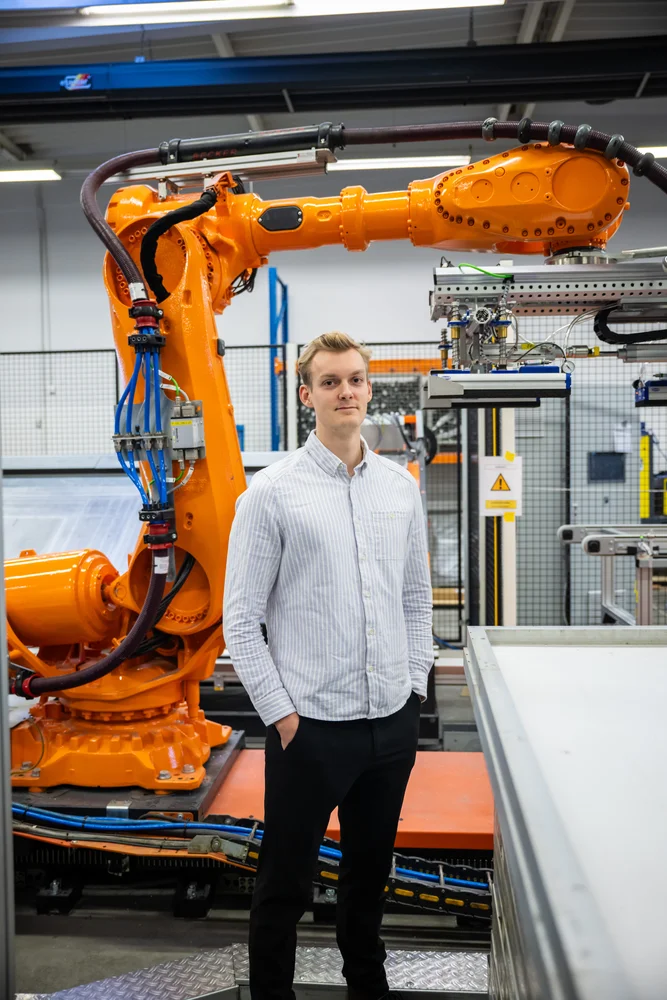
The Magdeburg start-up Solar Materials has developed an innovative process for recycling solar modules. Now the founders are making plans for their technology to be used worldwide.
The question of suitable locations for photovoltaic systems, which can include garden buildings, houses, offices and factories, is of interest to both home-owners and businesses.
By contrast, the founders of the start-up Solar Materials are involved with the other end of the process. “The average life cycle of a photovoltaic module is between 25 and 30 years. The first solar panels from the early 2000s will soon be coming to the end of their life. Initially, we were surprised that no one had really thought about what would happen to the modules after they had been taken out of use. So we developed a recycling plant to create a circular economy for raw materials in the solar industry,” said Fridolin Franke, one of the three founders of the company.
“Initially, we were surprised that no one had really thought about what would happen to the modules after they had been taken out of use. So we developed a recycling plant to create a circular economy for raw materials in the solar industry.”
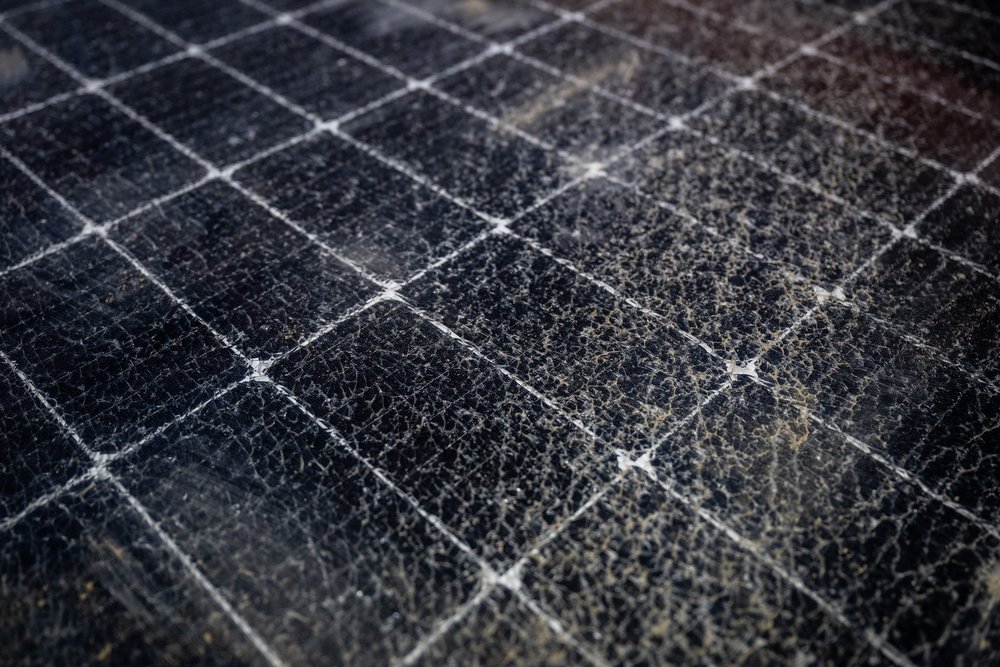
Currently, end-of-life modules are shredded and roughly sorted into glass, plastic and aluminum. The valuable materials, such as silicon and silver, fall by the wayside and literally disappear in the dust. “It’s a waste of resources that we simply can’t afford. Silicon, silver and copper combined make up more than half of the raw material value of a solar module. In Germany alone, the number of modules being recycled will increase to around five million per year by the end of the decade,” said Franke, whose background is in industrial engineering.
Around 15 percent of global silver production is currently used in the photovoltaic industry. As a result of the boom in the sector, this could increase to 80 percent. “By contrast, at the moment the recycling rate is zero. And amazingly, manufacturers simply don’t seem to care. Their focus is on putting more and more products onto the market,” explained Fridolin Franke.
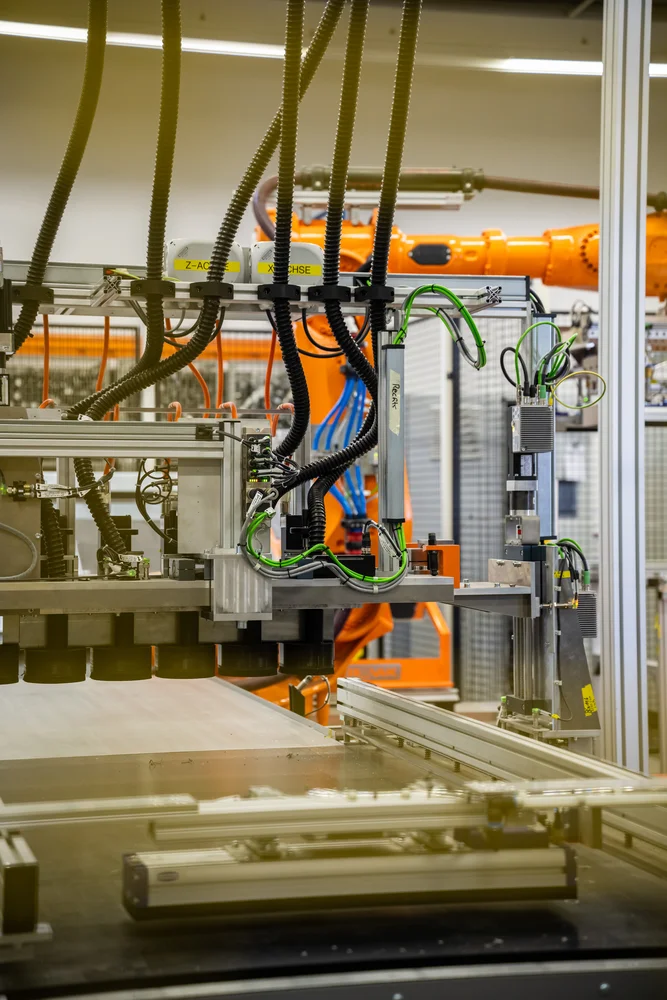
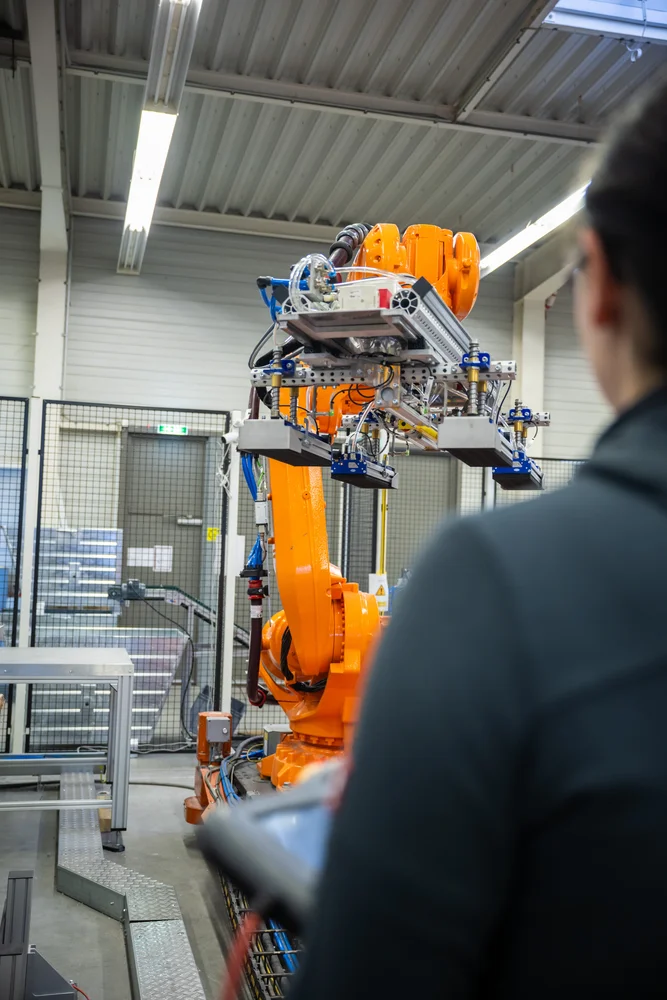
The pilot plant patented by Solar Materials is in a factory building in Magdeburg, where the company was founded in 2021. The technology is based on thermomechanical processes which are not only environmentally, but also economically sustainable. For example, recycling the raw materials uses around 80 percent less energy than primary production, which results in a much smaller carbon footprint. The process that has been developed is the first in the world to offer a financially viable solution for the efficient recovery of all the raw materials from solar modules.
Fridolin Franke has an explanation for why the three young engineers succeeded in pulling this off: “I believe we had the advantage of knowing nothing about recycling or about solar modules at the start. We also didn’t have a preference for a particular technology. We focused solely on the problem and we tested a large number of different approaches from infrared and lasers through to microwaves. Finally we found the most stable and economically viable process. Other technologies worked, but they were often much too expensive or too slow.”
“I believe we had the advantage of knowing nothing about recycling or about solar modules at the start. We also didn’t have a preference for a particular technology. We focused solely on the problem.”
The pilot plant will enable the start-up to move forward with its ambitious plans for the future. It can recycle 3,000 metric tons of solar modules per year and preparations are already underway to scale the process up to an industrial level. In the medium term, Solar Materials plans to separate 8,400 metric tons of solar cells a year into the original raw materials at a site in the Magdeburg region and another in southern Germany. The separation process produces glass in small pieces, copper and plastic in granulate form and silicon and silver dust. All of these materials are then processed by partner companies.
After the pilot project and the start of industrial production, the technology will be taken to an even larger scale. “We want to have a presence in as many markets as possible, because this will be a problem all over the world. We have already had inquiries not only from Italy, France and Spain, but also from India and Japan,” said Franke.
(Kopie 12)
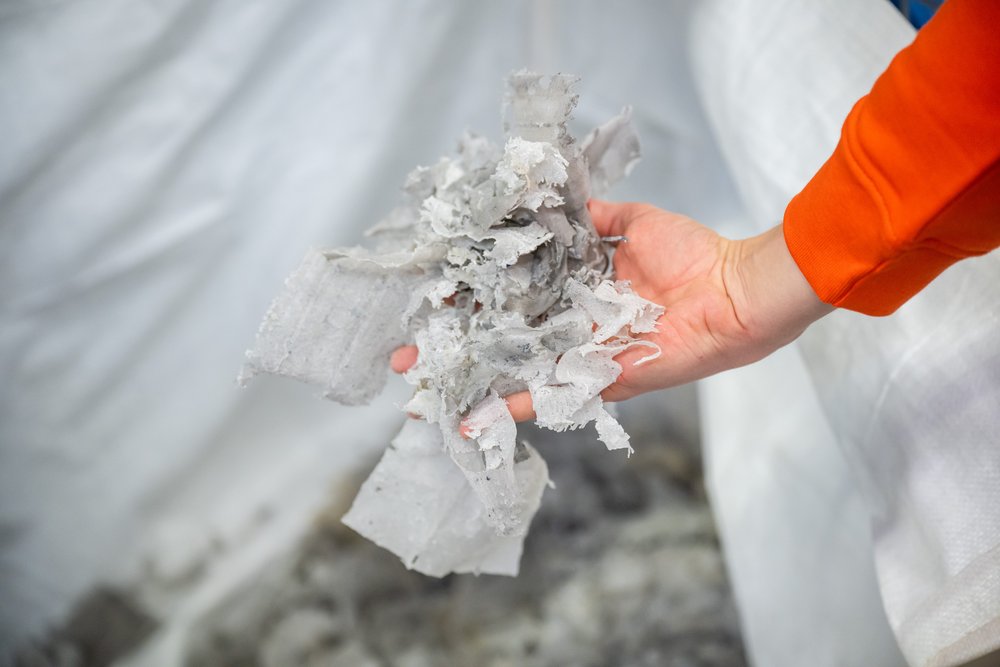
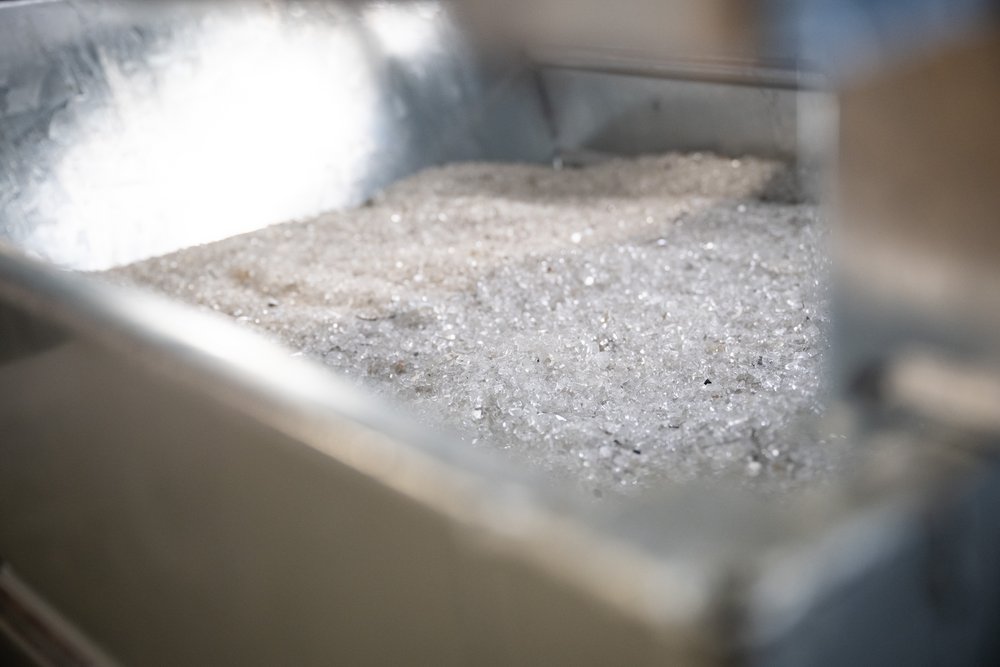
Solar Materials
“We want to have a presence in as many markets as possible, because this will be a problem all over the world.”
Magdeburg has proved to be an ideal location for the founders of the company Fridolin Franke and his colleagues Dr. Jan-Philipp Mai and Jan Bargel. Although the engineers studied and carried out their research at the Technical University of Braunschweig, they moved to Magdeburg with their new company. They were unable to find suitable factory premises with offices in Braunschweig despite the fact that they played an active role in the start-up network there. “Everything went relatively smoothly in Magdeburg. Also the logistics are ideal for us here, because the recycled material needs to reach our customers as quickly as possible. The funding from the Saxony-Anhalt Investment Bank and the support from the region’s Investment and Marketing Corporation were a big help in the early days,” explained Fridolin Franke.
The boom in the production of photovoltaic modules will lead to a massive increase in the demand for recycling services. The future is sunny for the cleantech start-up Solar Materials, even though the sun does not actually need to shine for the company to be successful.
Sie auch interessieren:
