

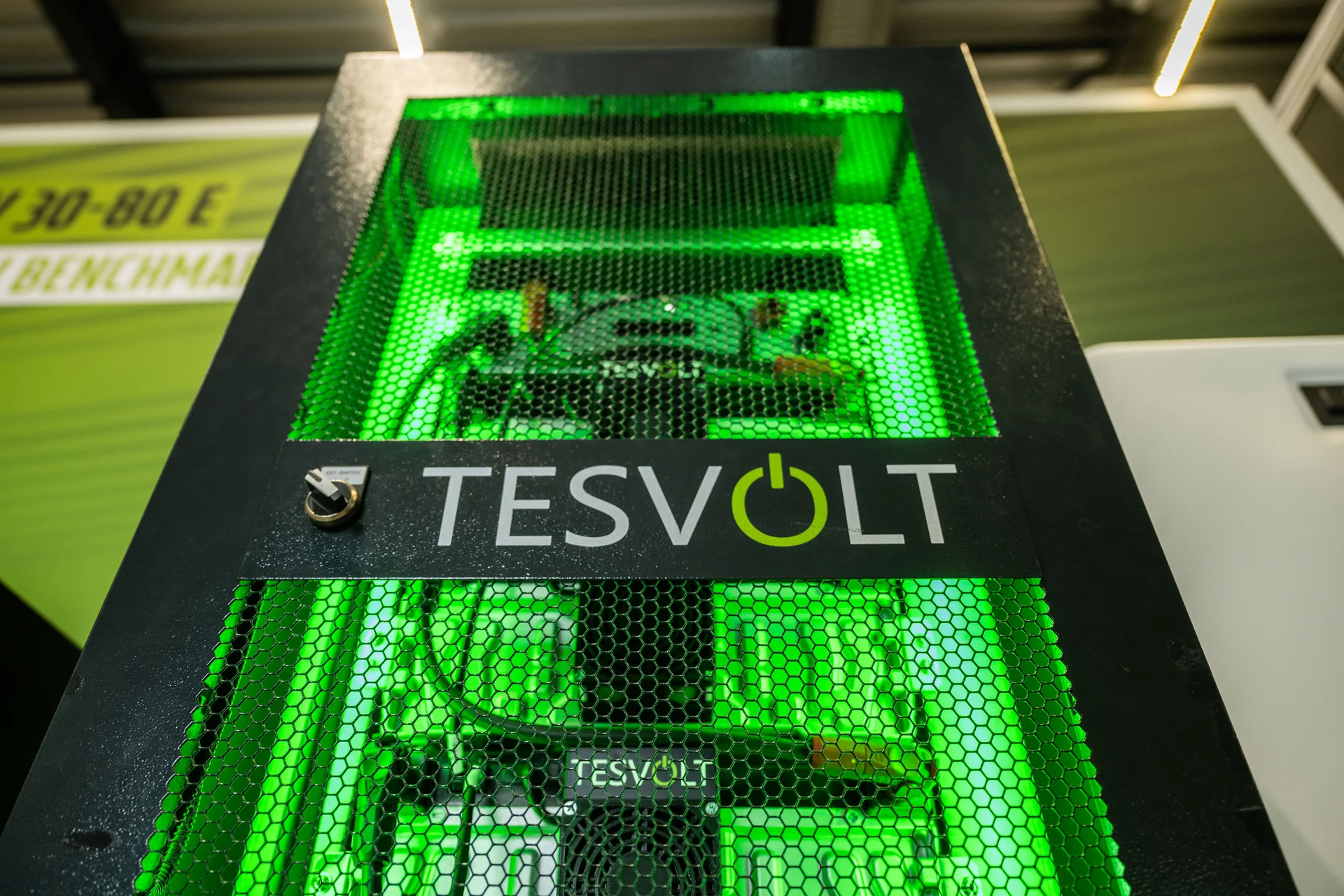
From cozy Alpine hotels to gold mines in the Australian outback – high-tech storage systems made by Tesvolt in Wittenberg are used all over the world. Two young entrepreneurs from the Luther city are shaping the future of power. They are now building Europe's largest gigafactory of its kind in their home country.
(copy 3)
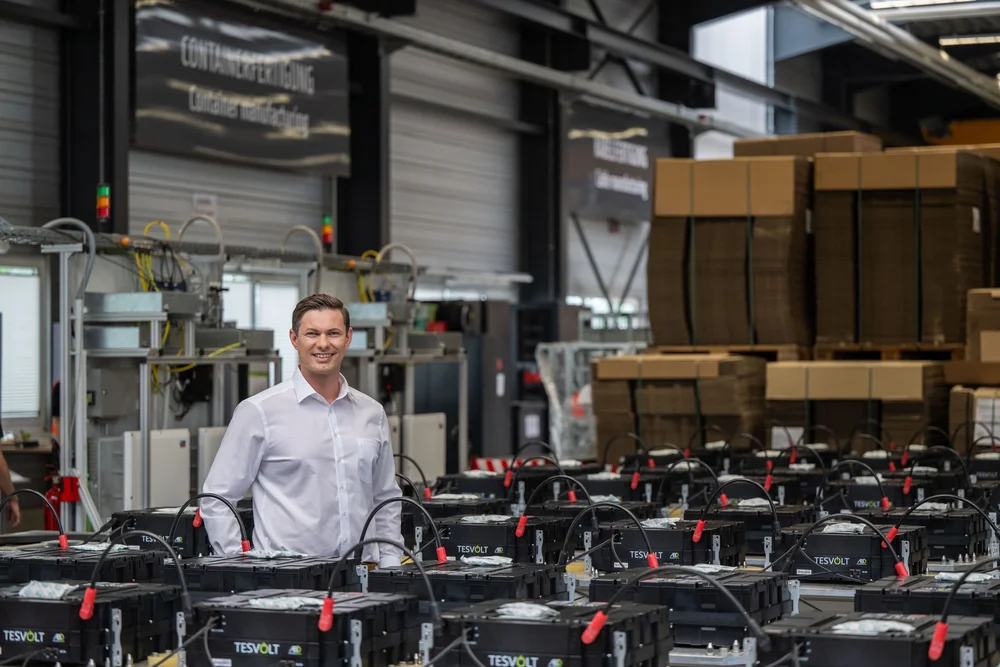
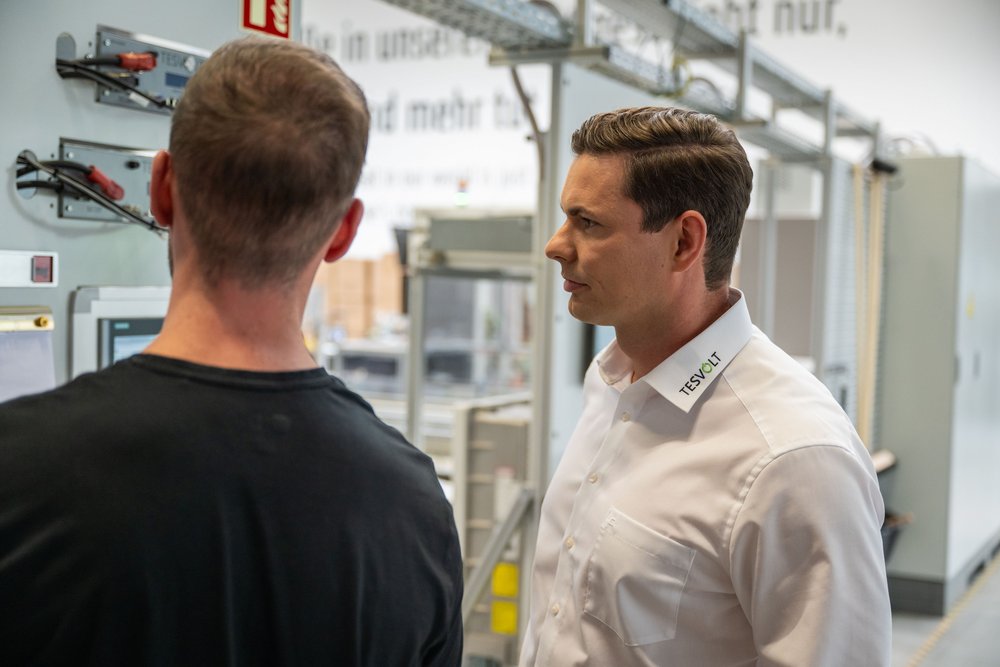
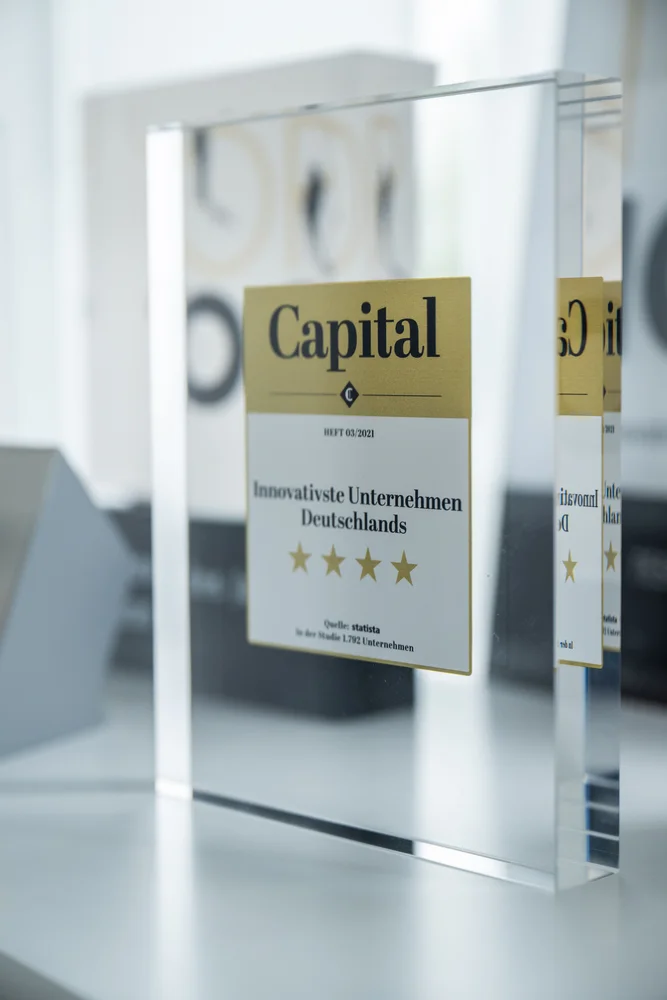
Simon Schandert tends to revert to understatement. On our way to the production hall, the 35-year-old points out a pretty impressive display case that contains more than a dozen business trophies that are evidence of his company’s unusual success story: Innovator of the Year, Top Company of the Year, Top Innovator, Rising Star of the Year, German Founder Award, smarter E AWARD, Best Employer. Schandert and his old school friend Daniel Hannemann have achieved a lot since they founded their start-up Tesvolt in Wittenberg ten years ago. With by now 300 employees, they are building intelligent electricity storage systems for commercial and industrial customers all over the world – and are generating sales in the high double-digit million euro range.
The "Tesvolt formula“
– for every corner of the world
With their original hardware and software, they succeeded to massively increase the performance and service life of wind and solar power storage systems. The "Tesvolt formula" ensures that all battery modules in a system are evenly balanced at all times. Customers all over the world appreciate the resulting top performance. Since its launch, Tesvolt has realized more than 5,000 projects, for example for gold mining in the Australian outback, water pumps in Rwanda, viticulture in Brazil, salmon farming in Norway, hotels in the Alps and for modern prefabricated buildings in Aschersleben. "We want to bring clean, affordable energy to every corner of the world," says Hannemann, who is now the company’s CEO. "This is because we believe that energy belongs to everyone, regardless of time and place."
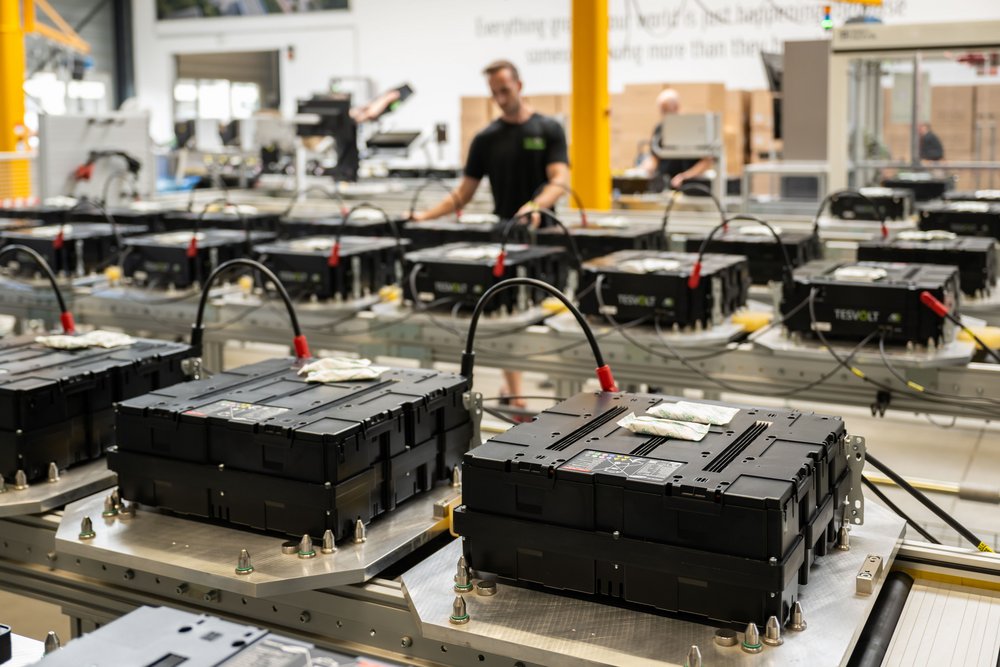
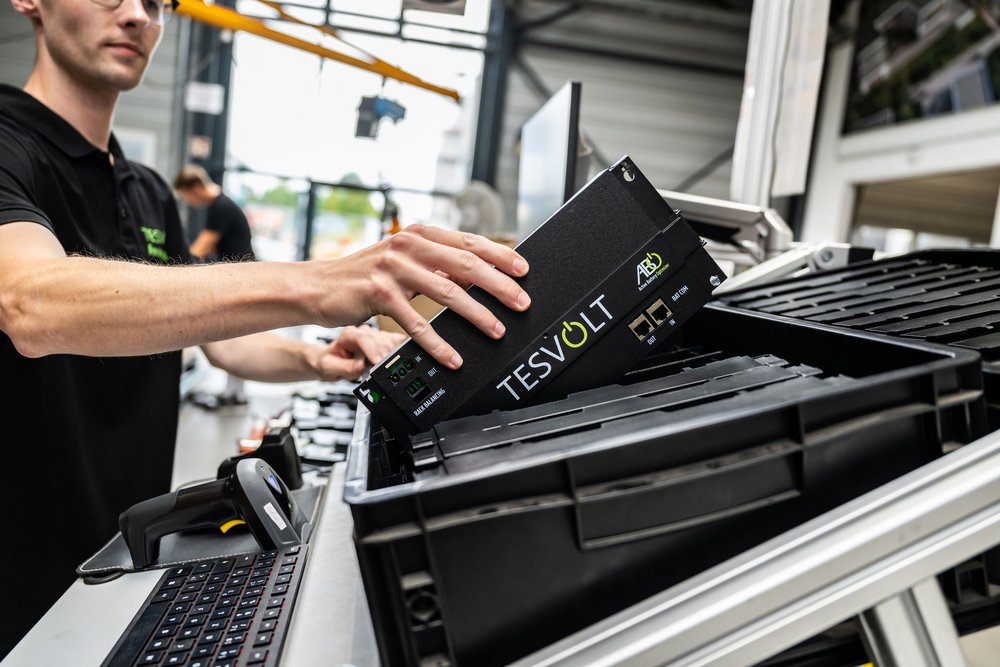
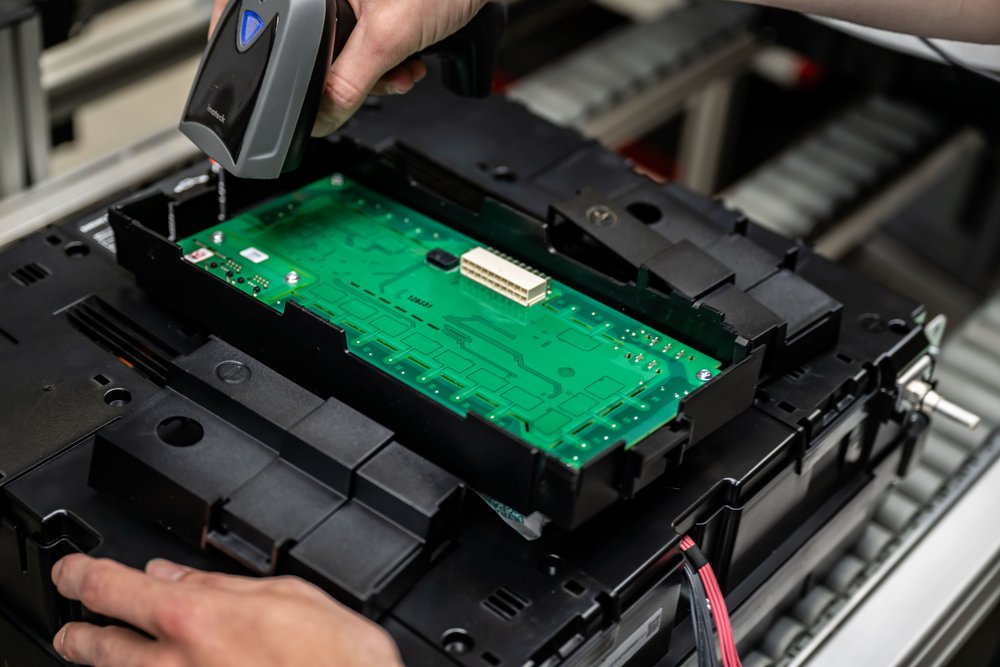
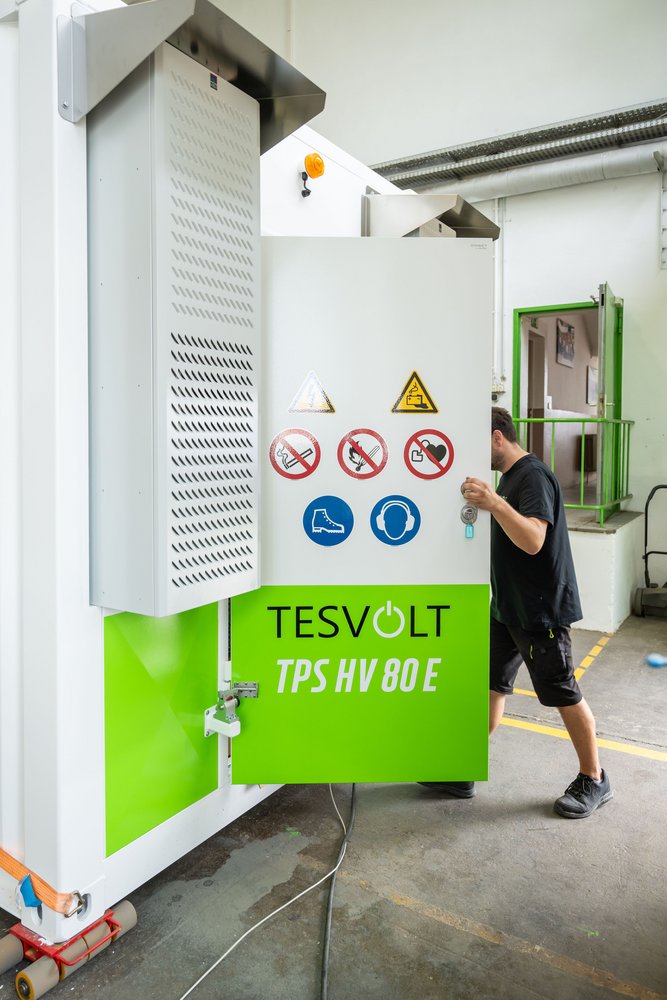
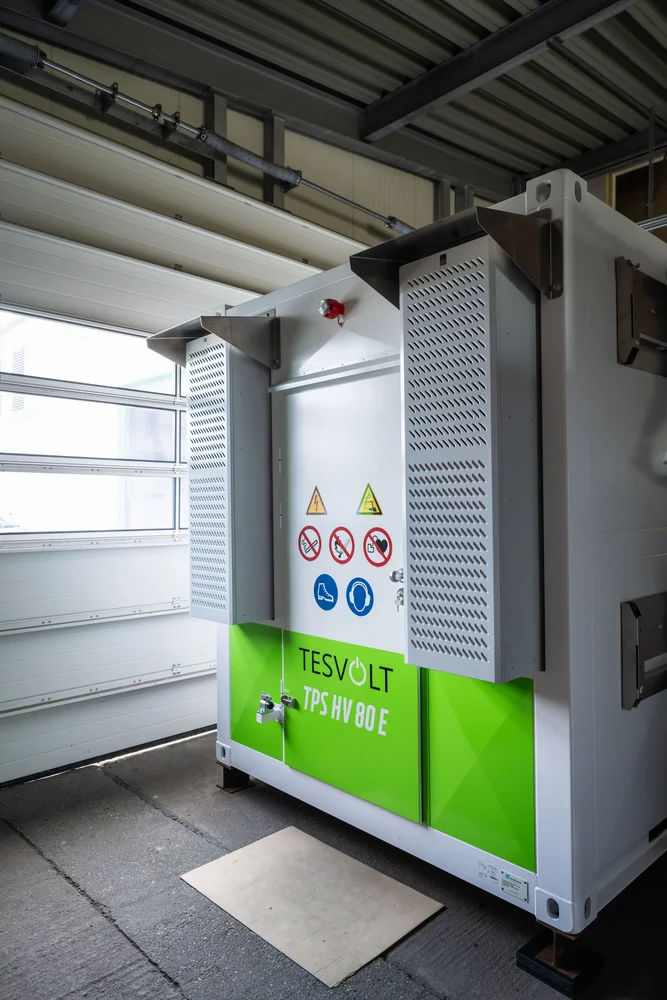
Columns of battery modules are lined up in the clinically clean production hall on the outskirts of Wittenberg, monitors and test cabinets are lit up with solar power generated on the roof. "We operate the most modern cell test track in the world," says Schandert. "Each module is put through its paces before assembly to ensure there are no failures." Lithium-ion batteries from Samsung are installed in combination with Tesvolt's own "Dynamix Battery Optimizer". Each system is custom-made and designed to last up to 30 years, with a guaranteed service life of ten years. The delivery of a large container system can currently take more than a year. However, this is about to change.
(copy 6)
Under construction: Europe's largest gigafactory for stationary storage devices
The company is currently building Europe’s largest gigafactory for stationary battery storage devices, right on its doorstep: a largely automated and digital production facility for up to 80,000 storage units per year is being built for 30 million euros. "This corresponds to a tenfold increase compared to our current capabilities," says Schandert. "We want to conquer markets in several European countries at the same time." The factory is scheduled to start operation in fall 2025 and will provide up to 400 jobs, even if numerous robots are used in production. There are also plans to spend 30 million euros on expansion of a development and technology center with lecture halls. "We are doing one thing at a time," emphasizes Schandert. "We prefer a down-to-earth attitude when it comes to growth." This has always been the case.
(copy 11)

The foundation of the company is based on two family stories
Tesvolt's success story began with fortunate circumstances. Simon Schandert's father runs the traditional Elektro-Schandert business in Zahna-Elster. His son, who was born in 1989, trained as an electronics technician with his father and built his first photovoltaic systems with him in 2004. He then went on to study industrial engineering at the TU Berlin, specializing in electrical engineering, and began to focus on battery technology. Those were the boom years of the solar industry in Saxony-Anhalt. Daniel Hannemann also started a company for building solar systems, when his grandfather was asked by regional energy suppliers to make land on his farm available for photovoltaics. "We identified the need for efficient battery storage systems in agriculture and industry very early on," says Schandert. The two men founded Tesvolt in 2014.
(copy 17)
Maximizing intelligence and safety
The problem with conventional battery packs is that they are only ever as strong as the weakest link in the chain. This means that they slow each other down. Hannemann and Schandert found a way to overcome this weakness: they developed an intelligent system that ensures consistent use and utilization of all battery modules. The performance and service life of the modules is significantly increased as a result. "We add a brain to the battery cells," says Schandert. "At Tesvolt, strong cells support weaker cells." This remains the inventors' patented formula for success to this day.
What's more: Tesvolt has also been setting European safety standards. The start-up is one of just a few companies to have its battery systems tested and certified by TÜV Rheinland. This means that the storage units offer the greatest possible level of protection against defects and fires. They can be connected to power grids and the Internet or run autonomously. Tesvolt is happy to help at all stages: from initial planning and installation of the storage units through to service and maintenance. The largest project in the company's history to date is currently under construction in Worms, where the Wittenberg-based company is building a battery park worth millions for a solar park operated by an energy supplier from Rhineland-Palatinate – one of the largest battery storage projects in Germany.
Saxony-Anhalt provides early support
The state of Saxony-Anhalt was among the first supporters in this success story. Three years after its foundation, the funding instrument IBG Beteiligungsgesellschaft is already investing several million euros in the young company. The Princely House of Liechtenstein has also been a leading shareholder since 2021. However, more than half of the shares still belong to the founders – and they want to keep it like that. "We are young, innovative and agile," says Simon Schandert. "We don't want to be restricted by corporate structures." They also want to stay in their home country, and appreciate the short distances within the triangle formed by Magdeburg, Leipzig and Berlin. The two entrepreneurs are also excited about the support they have been receiving from their state government: State Premier Reiner Haseloff attended the ground-breaking ceremony for the gigafactory and is a great advocate of Tesvolt. "As a politician and a physicist he understands what we do and why we do it. That is hugely important for us,” Schandert explains.
Sie auch interessieren:
