

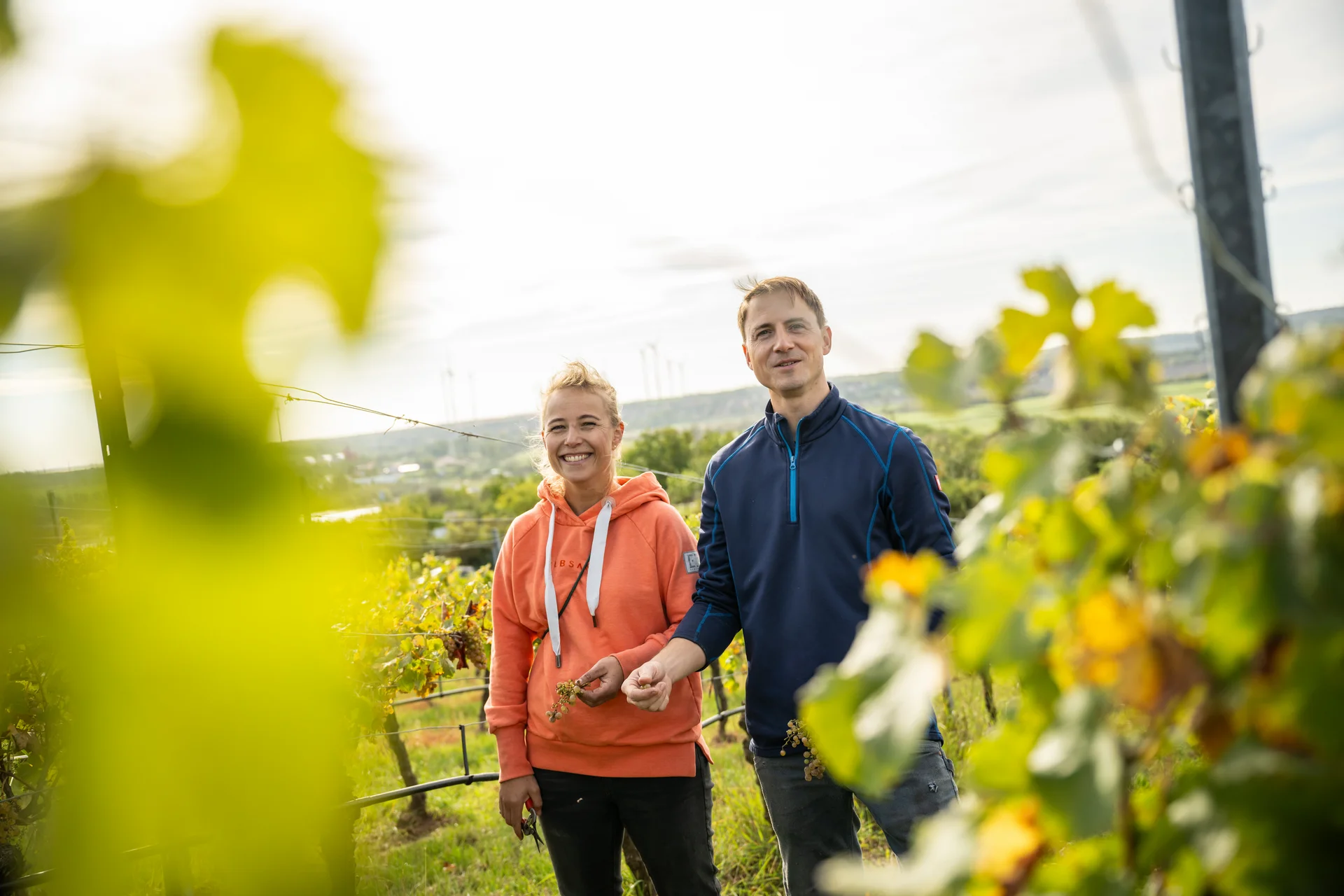
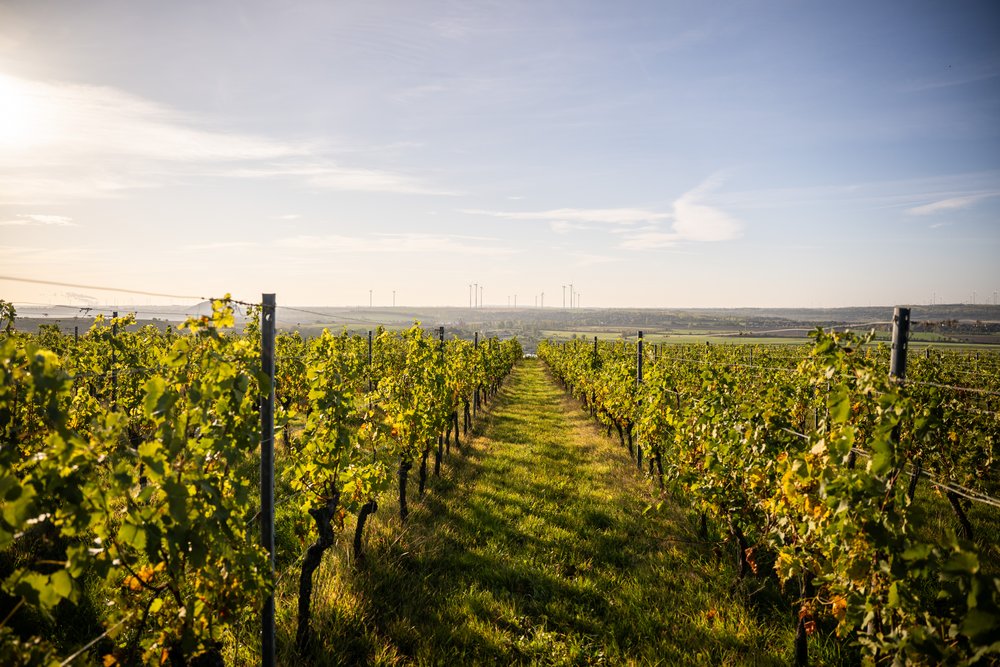
The vineyards in Höhnstedt are bathed in late summer sunshine. The golden romance of winegrowing: for Elisabeth and Jochen Born this is what happiness feels like. Their life is full of joy because of what they do. Their happiness comes from the strong roots they have in their own soil and their connection to the 1000-year-old tradition of winemaking in the Saale-Unstrut region.
“The light is bright, strands of spider silk are floating through the air — now we are moving into a peaceful fall...” Kurt Tucholsky described late summer, early fall and the intermission between them — this very short period in the year — as the fifth season, which for him was the most beautiful time. It is incredibly romantic to sit in a vineyard at this time of year or in a winery sampling the young wine, known as Federweißer, and Flammkuchen, also known as tarte flambée. Jochen Born nods. “That’s how it should be. We sell a lot of positive emotions along with our wines.”
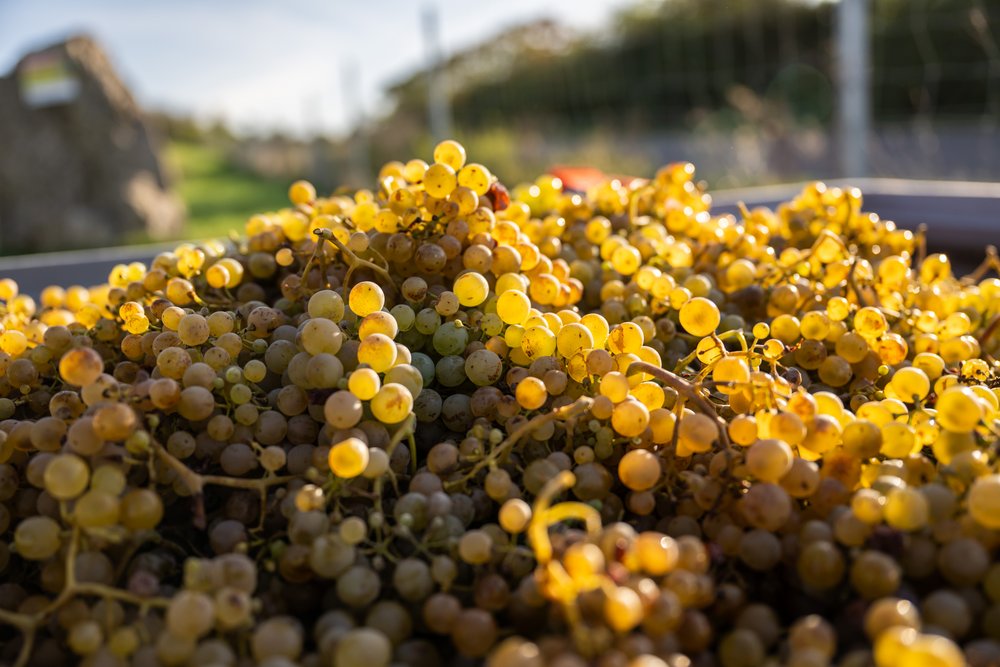
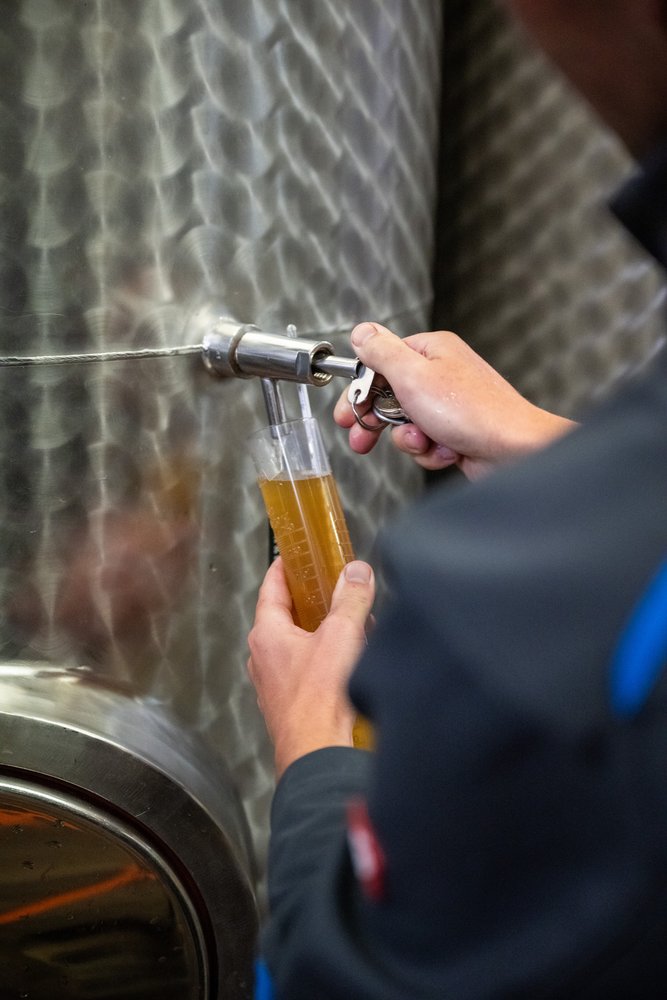
“The Riesling grapes are too ripe,” he calls to his wife. How can Riesling grapes be too ripe? “We actually wanted to make a Kabinett wine from these grapes, but the alcohol content is too high for that,” he says, explaining the change of plan without any major concern. “What we do is connected to nature. This means that we are constantly reinventing ourselves and we enjoy doing it.”
(Kopie 2)
“It became clear to me that owning a vineyard is something very special.”
While we are talking, Elisabeth Born’s phone rings. Someone wants to book a vineyard tour and a tasting. Anyone who has walked up the steep vineyard and back down again will have a rather different relationship with the wine sparkling in their glass in the sun, as the Born family knows. Their father used to give guided tours of the vineyard and Jochen and his wife Elisabeth are the fifth generation of the family to grow vines here. They took over in 2010 from Günter Born. Until 1990, Günter was an electrical engineer at the Buna plant in Schkopau and then he founded his vineyard. He was the first member of the family to go into winemaking full time. Elisabeth Born remembers it being a lot of work. While she was growing up, there was very little free time and hardly any holidays. Why did she still decide to continue the family business?
“I was crowned wine princess in Höhnstedt,” she explains, “and for the first time I met girls f my own age who came from winegrowing families. I realized that owning a vineyard is something very special, particularly as this wasn’t even possible in the days of the GDR.” Private winemakers had to give up their vineyards to agricultural cooperatives or supply their grapes to the winemaking cooperative in Freyburg. The wines went to delicatessen stores and luxury hotels in the former East Germany, but were rarely available to ordinary people. After the fall of the Berlin Wall, winemakers like Günter Born found it hard to put their quality wines from Germany’s northernmost winegrowing area on the market. But the Saale-Unstrut region is now well known for its 1000-year history of winemaking. If “Saale-Unstrut-Wein” appears on the label, it means the content of the bottle is something special — from lively, fruity whites to soft, velvety reds.
(Kopie 4)
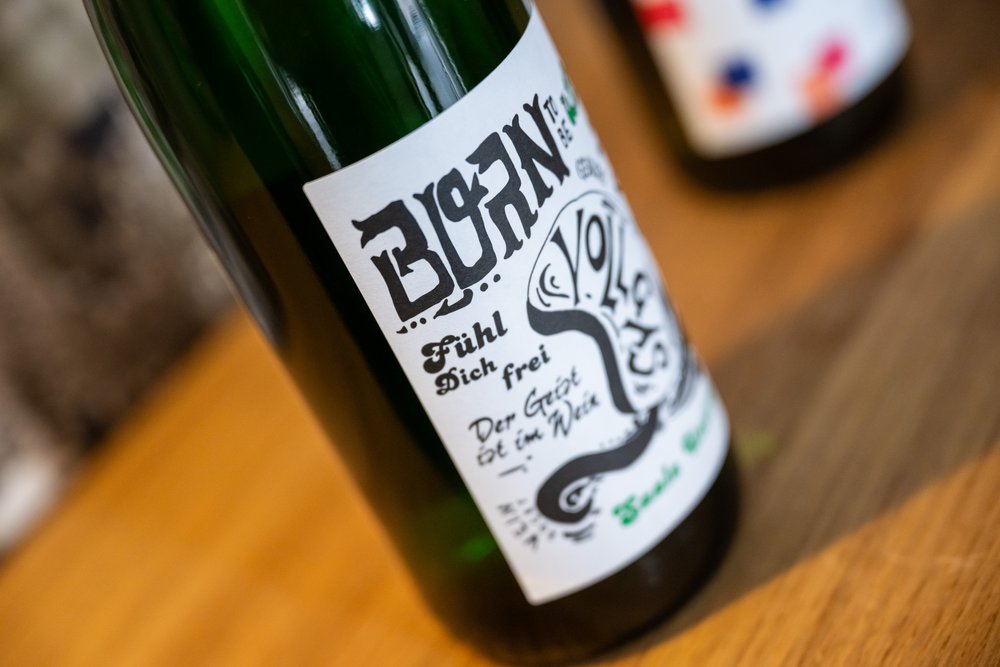
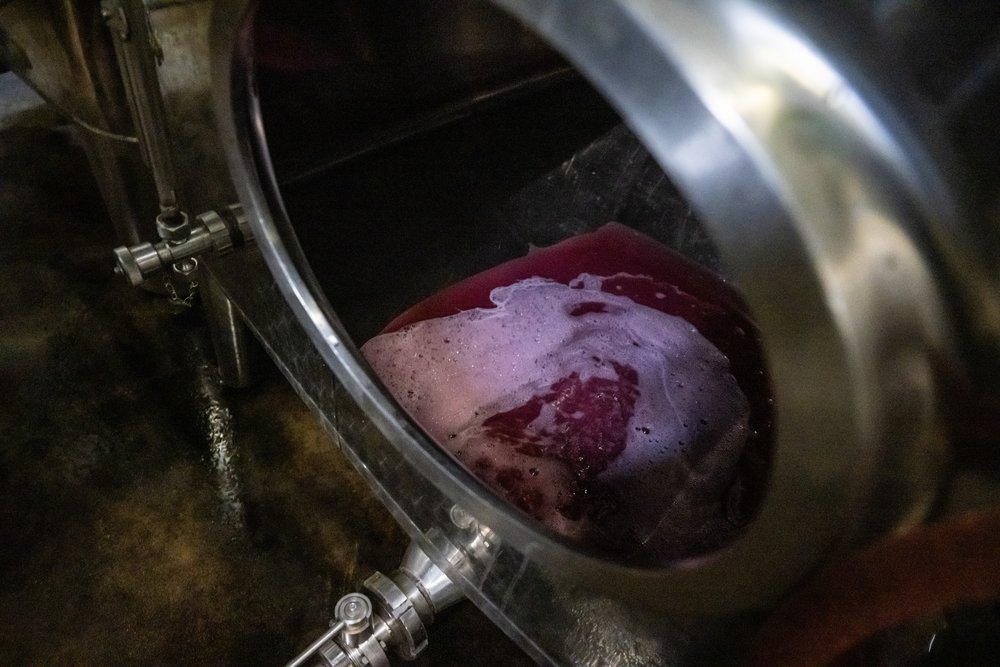
“As winemakers we have to think about the growing and ripening of the grapes years in advance.”
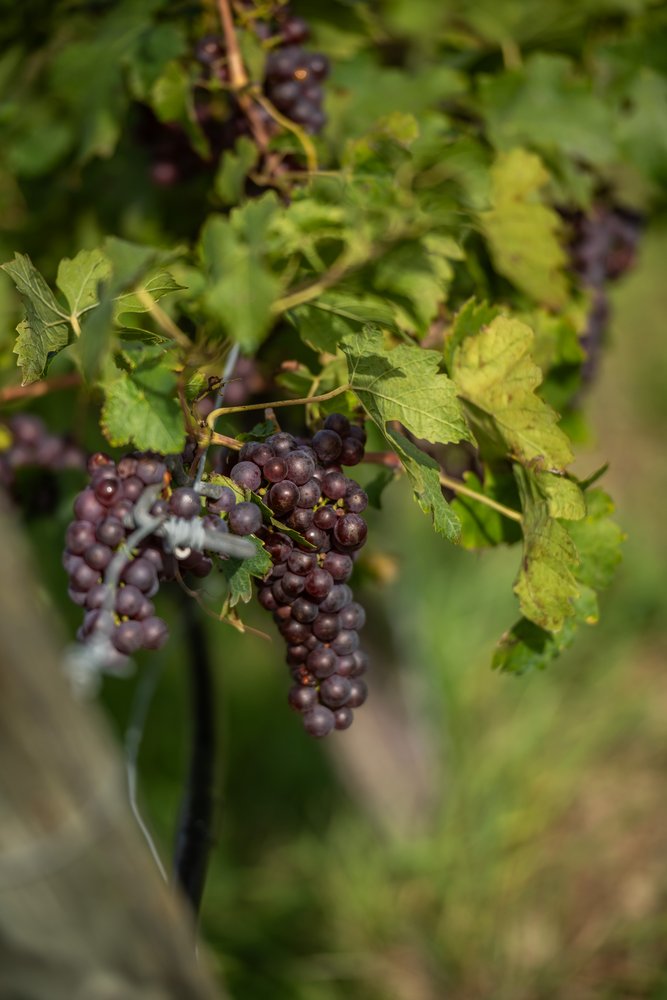
“Riesling grapes never ripen here,” used to be a saying among the Born family, but the effects of climate change are being felt in the Höhnstedt vineyards. In the shadow of the Harz mountains there is now less rain and Süßer Lake creates a microclimate that has a positive impact on the wines. The fifth season of the year is lasting longer. “Even pinot noir grapes ripen here now,” says Elisabeth Born. “It’s all about how we manage the vines and the cultivation technology. As winemakers we have to think about the growing and ripening of the grapes years in advance,” adds her husband. He made his way gradually into the family and their business, the couple explain with a smile. Then he was “given” the family name Born by customers, so when he and Elisabeth married he chose to take the name officially.
Jochen Born, whose original name was Hinderer, comes from a village near Stuttgart. “After training to become a winemaker, I didn’t actually plan to work in the wine industry,” he explains with a laugh and goes on to say that he then studied beverage technology at Geisenheim University. There he got to know Elisabeth, a winegrowing student, and his life took an unexpected turn.
(Kopie 6)
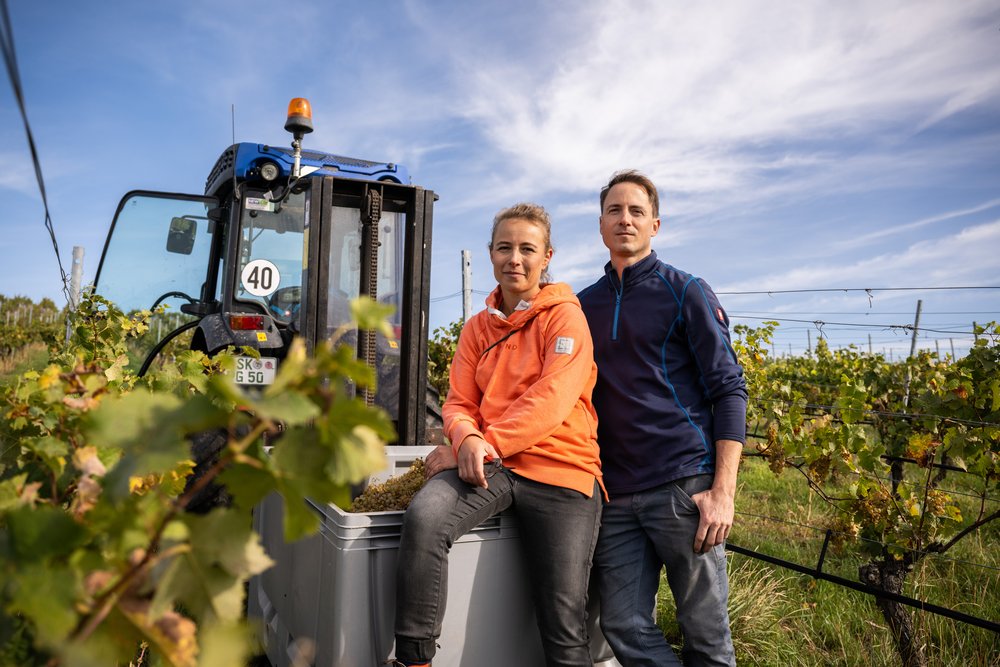
“We do everything manually, from looking after the vines through to harvesting the grapes.”
Elisabeth Born puts a bottle of homemade grape juice on the table and points to the label: “The children painted that picture.” But she wants family life in the family business to be different from how it was for the previous generation. On Sundays, the Borns spend time with their two children. They make sure that work is associated with positive emotions. “When the two-year-old is allowed to ride on the tractor and the seven-year-old can take part in events, they enjoy what their parents do for a living,” says Elisabeth Born.
While she is talking, an employee tips a load of pomace into a tub. Pomace is the solid remains of grapes that have been pressed and is spread on the ground between the vines while it is still fresh. It is a very natural form of fertilizer.
(Kopie 8)
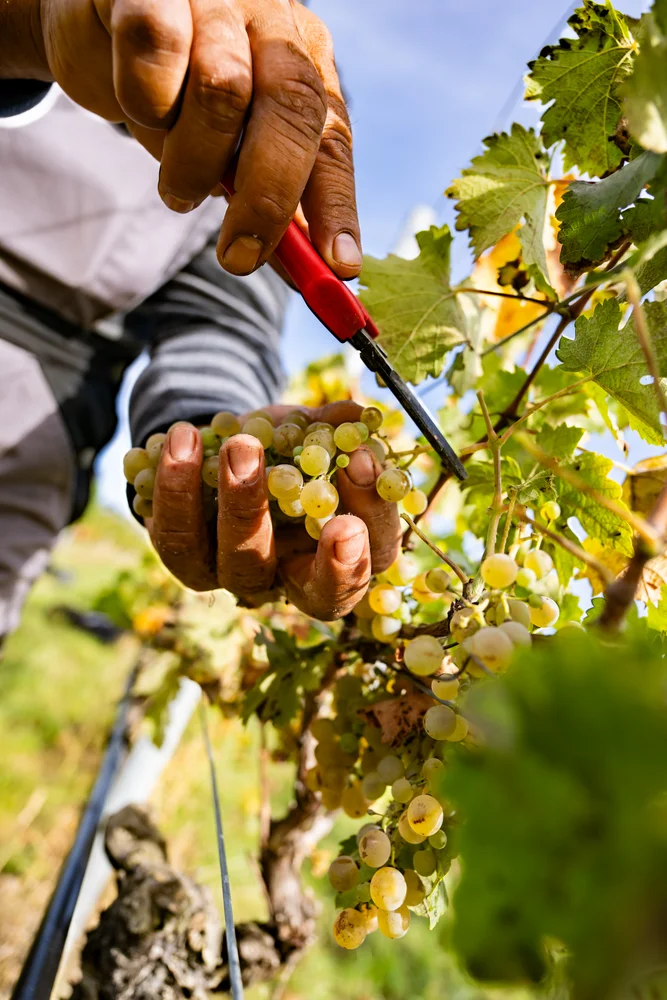
“The decision to move over to organic winegrowing was mainly about how we felt. When our first child was on the way, we didn’t feel good about spraying chemical pesticides in the vineyard,” explains Jochen Born and says that, as someone who went to a Waldorf school, he has grown up embracing the concept of organic farming. The business now uses completely natural pest control products made from minerals and plant-based substances and has received organic certification. “We do it mainly for ourselves, because of our own convictions,” says Jochen Born. He was happy to take on the additional work. Because the natural protective film stays “only” on the surface of the vines, the products have to be reapplied every five weeks and more often than that if the weather is wet and windy.
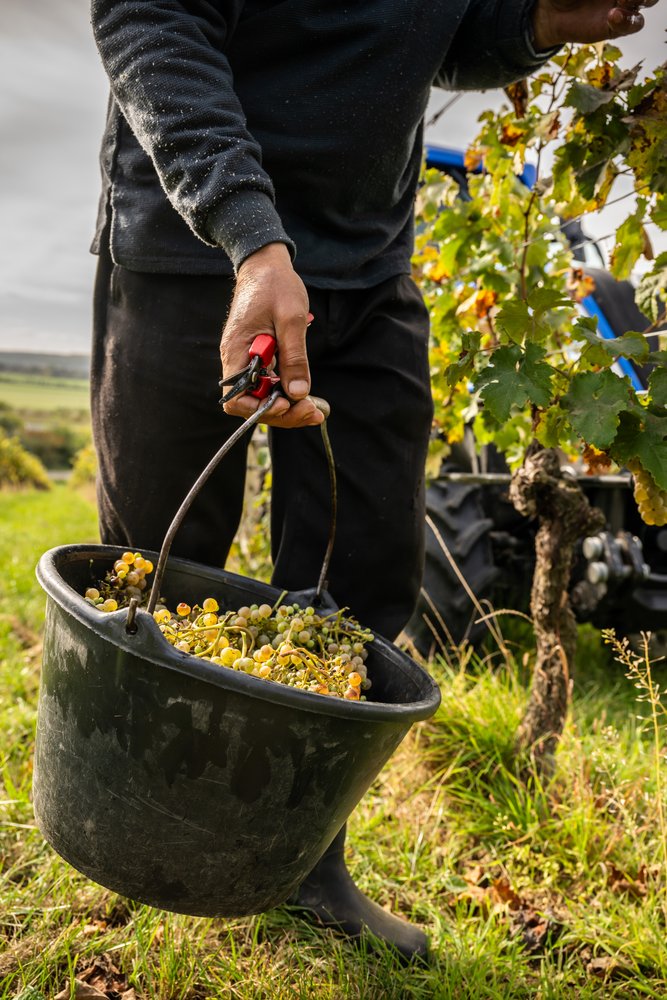
“We do everything manually, from looking after the vines through to harvesting the grapes,” says Elisabeth Born. “Our vineyards have a gradient of up to 30 percent and our terraces have stone walls, so we cannot use machinery.” Elisabeth and Jochen Born are not alone in having to do hard physical work to manage their vineyard. They are some of the founders of an association named after the 51 degree latitude line. This is the line that runs through Germany’s most northerly winegrowing area.
Eight winemakers have come together to present the fine wines that are produced on their small terraced vineyards. “The members of the association meet once a month to taste each other’s wines. The final blind tasting with winemakers, sommeliers, restaurant owners and wine journalists takes place every year in August,” explains Elisabeth Born. “That’s when the two best wines are chosen and awarded the ‘Latitude 51’ seal of the year.” The conditions for the competition include domestic grape varieties, careful harvesting of the grapes by hand, a yield of not more than 5,000 liters per hectare and a must weight of at least 95 degrees Öchsle. “You would expect to find wines of this quality in the Mosel region rather than here,” says Elisabeth Born proudly.
(Kopie 10)
When the grape harvest is finished and the wind brings colder weather to the vineyards, the Borns start making their own mulled wine using a new recipe every year. In early spring when the vineyard is still resting, Jochen Born sets out with his shears to prune the vines. In between these two periods, winegrowers can think about taking a few days of vacation. “Winemakers are generally good skiers,” says Elisabeth Born with a grin.
Author: Kathrain Graubaum
Sie auch interessieren:
