

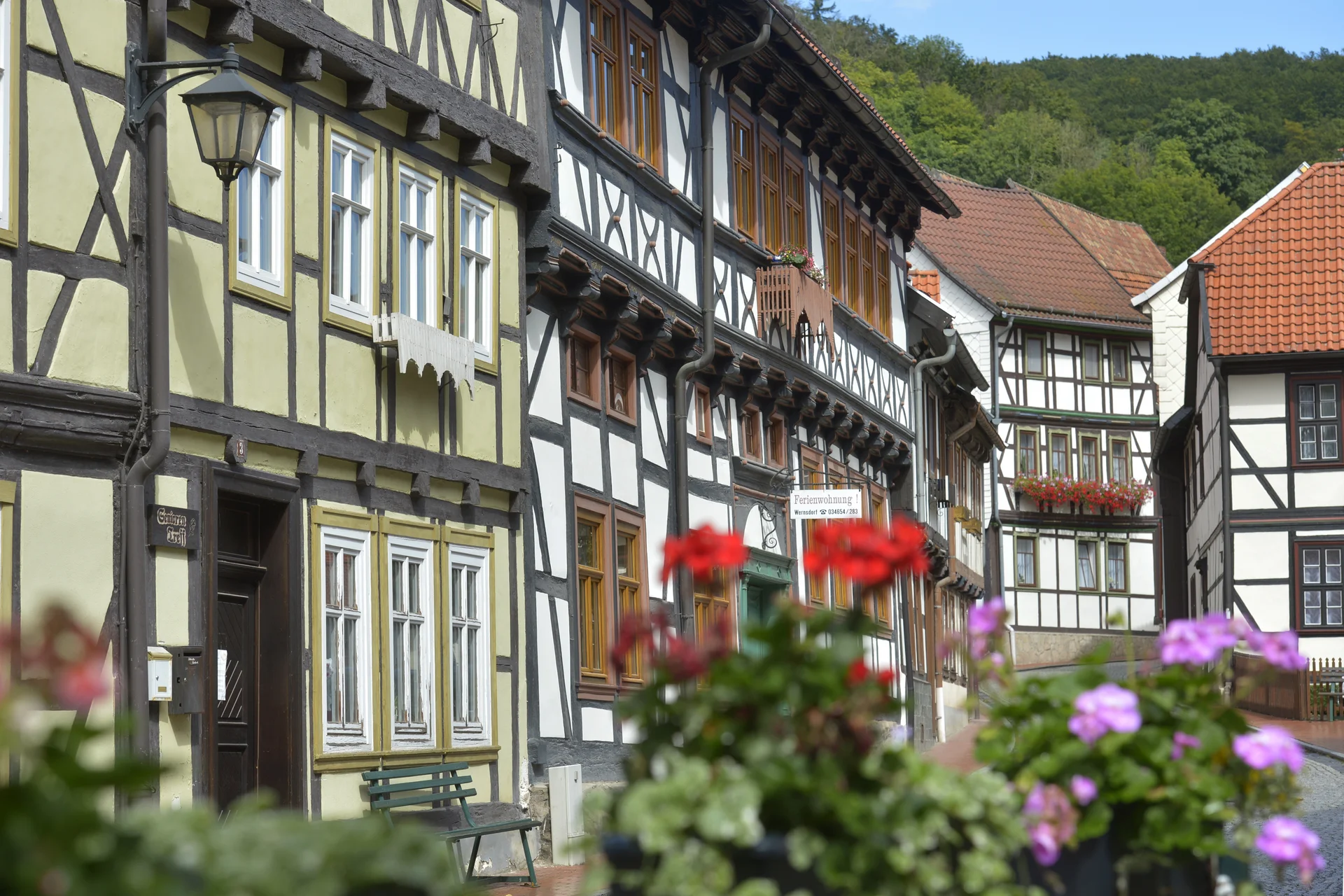
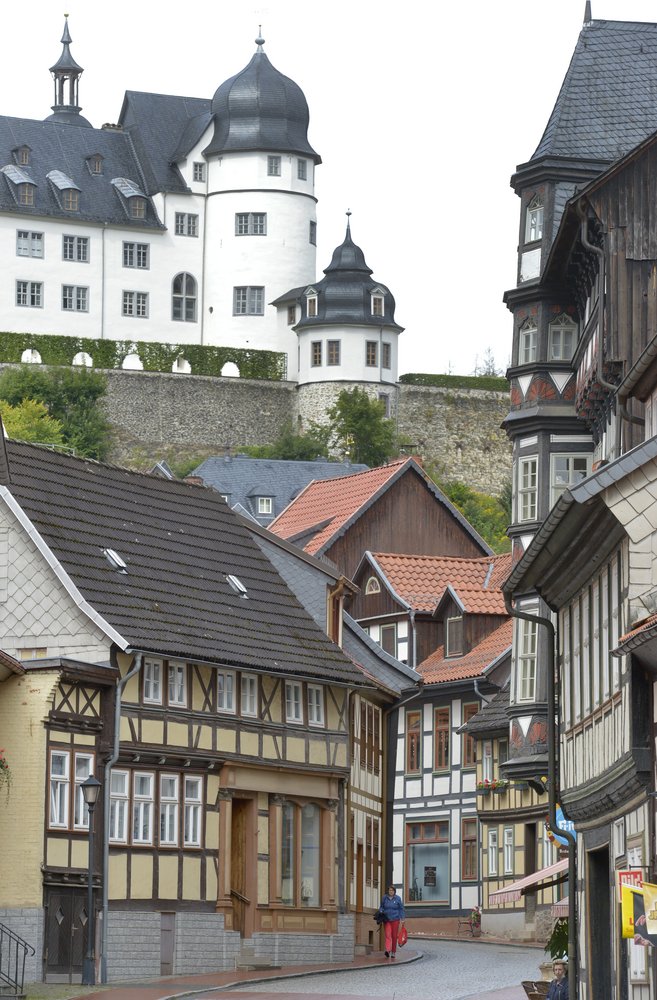
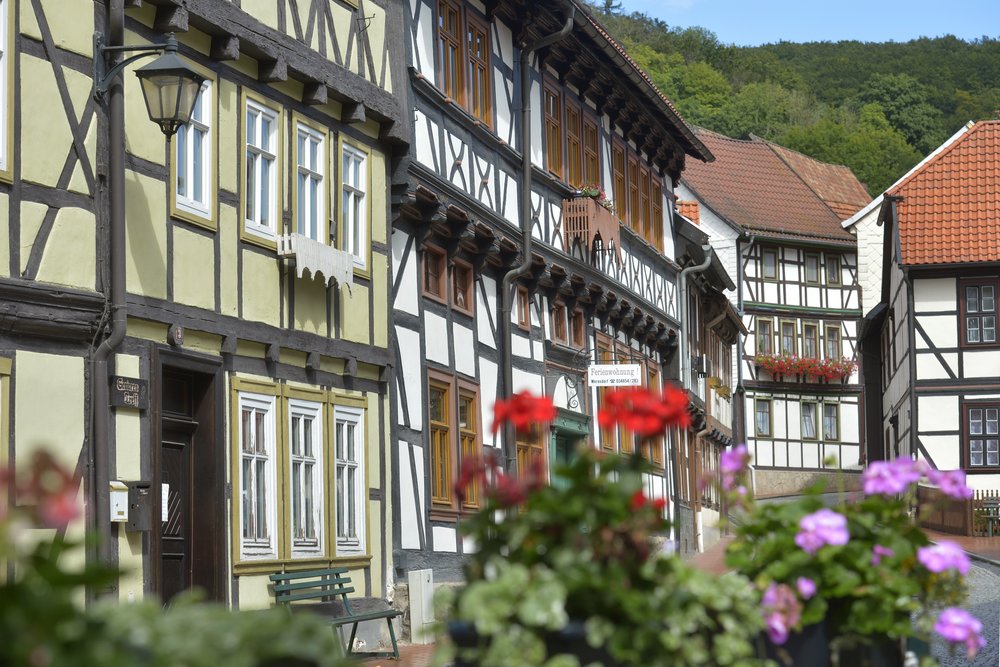
Anyone who enjoys a stroll through a medieval town has plenty to choose from in Saxony-Anhalt. Most people are familiar with Wernigerode and Quedlinburg, but one hidden gem is Stolberg in the southern Harz region – a small, carefully preserved town. Nowhere else will you find more than 450 half-timbered houses so closely packed together in narrow streets.
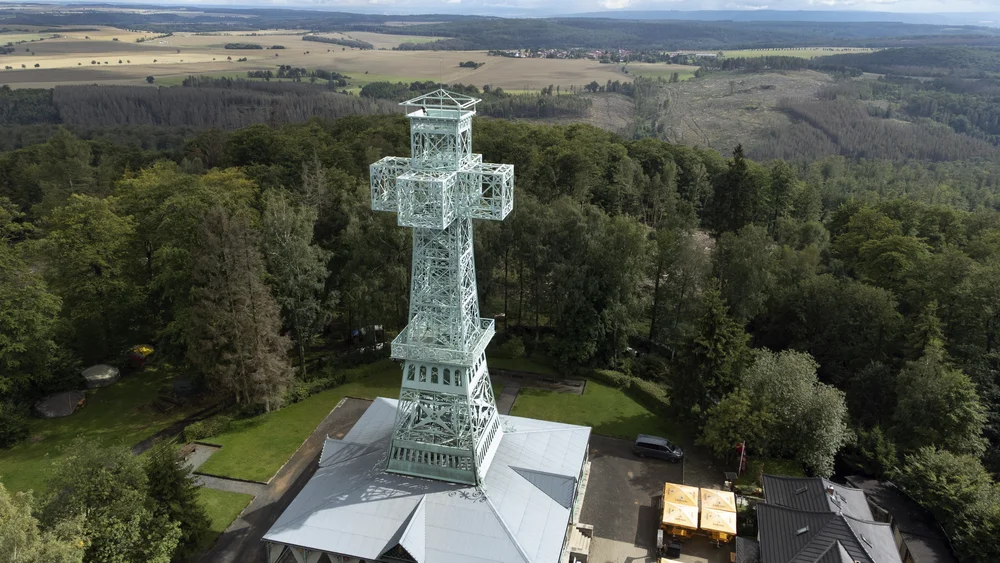
Early morning in Stolberg. The first walkers are making their way towards the circular routes, which often begin with a climb. The walk up to the Auerberg and back is almost nine kilometres. Anyone who climbs the Joseph Cross observation tower, which was built there out of iron in 1896 and is known as the Eiffel Tower of the Harz, will have panoramic view of the mountains and may even see the Brocken mountain if the visibility is good.
The route to Luther’s beech tree also begins with a breathless climb. And as with everything in Stolberg, there is a story to go with the tree, which is probably the fifth to have fulfilled this role. A wooden board explains: When Dr Martin Luther visited Stolberg on the Friday after Easter in 1525 and walked to this hill with his friend Reiffenstein, he compared the town of Stolberg rather appropriately to a bird. The castle, he said, was the head, the market the body, the two alleys the wings and the Niedergasse (lower alley) the tail.”
Claudia Hacker, the head of tourist information, has her office in the Niedergasse on the ground floor of the Alte Münze museum. When she describes the town, she still uses the image of a bird. This is because the layout of the town, which is nestled in the narrow valley of the Thyra river and its tributaries, has hardly changed for centuries. There are still 18 half-timbered houses in Stolberg that Luther could have strolled past.
The narrow alleys with their colourful houses and the castle that towers over everything are the main features that attract visitors to Stolberg. “But since the COVID-19 pandemic, our clientele has changed,” says Claudia Hacker. “Previously most of our visitors were older people looking for a peaceful idyll, but we are now seeing more and more walkers, cyclists and families.”
Mid-morning in Stolberg. At the monument to the militant reformer Thomas Müntzer, which is close to the place where he was born in 1489, a group of tourists is gathering for a tour of the town. Today Bernd Ehrenberg is welcoming the guests. They accompany him through streets and alleyways on what could have been a quick stroll if it were not for the fact that almost every building has a story to tell. There is the town hall which has no staircase. Every floor can be accessed from the hill going up to the town church. Or there is the Kleine Bürgerhaus, today part of the town museum, which has stood in the Rittergasse since 1470. And then comes the Alte Münze in the Niedergasse, where Ehrenberg tells the visitors about mining and the right to mint coins, the sources of Stolberg’s original wealth.
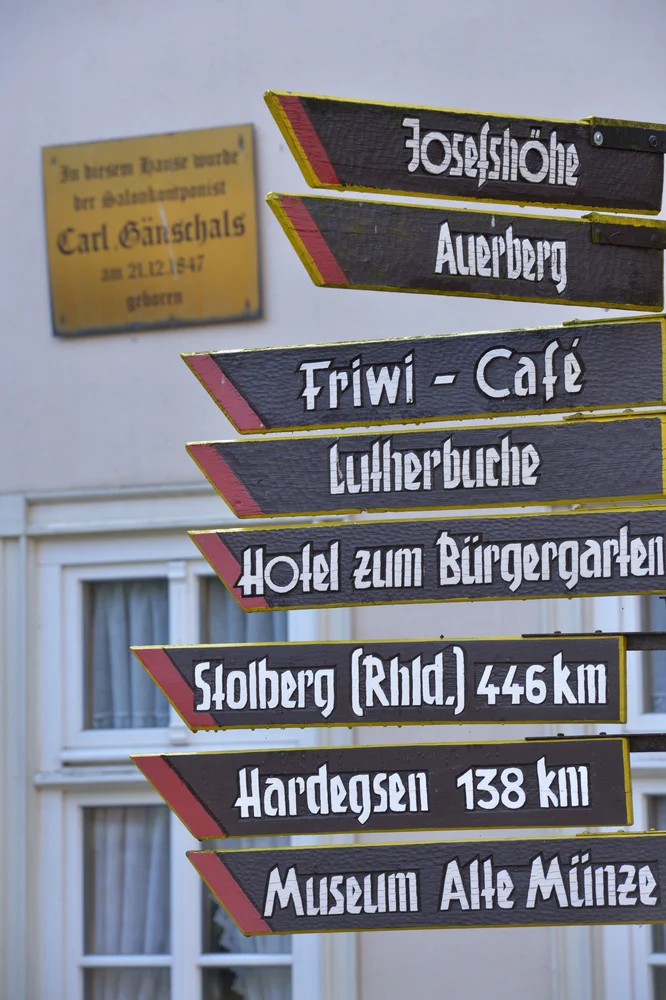
Ulrich Franke does not make his way down the Niedergasse, which is full of tour guests. Instead he hurries – you might say behind the scenes – down Uferweg on the banks of the Thyra river. Today Franke, who is mayor of the town, is a well-wisher at a diamond wedding celebration. He has been head of the town of 1100 people since 1990 and so he knows everyone and everyone knows him.
“We were already laying fibre optic cables when other towns didn’t even know what the Internet was”
He can tell stories dating back centuries and some from his period of office. He explained how he had to convince the residents in the early 1990s to remove from the beams of their houses the boat varnish that they had procured with great difficulty during the Communist era and to discard the “lovely” white plastic windows from the period after German reunification. He also tells of how carefully the new pipes and cables were laid under the centuries-old foundations. Or how all the streets were not just dug up, but actually completely removed. “We were already laying fibre optic cables when other towns didn’t even know what the Internet was,” he said.
Another example of modern thinking in an old town is currently making its way through Stolberg’s streets and alleys: a small automated bus, admittedly still a pilot project, but with a distinct possibility of returning at a later date. What concerns the mayor today is that the local government reforms are having an impact on the residents’ commitment to preserving the historic buildings, which is so essential for the success of the preservation measures.
Midday in Stolberg. The Gasthaus Kupfer is packed with customers. As in most restaurants, the menu is dominated by regional Harz cuisine, including game, trout and local beer. But the chef at the Kupfer also serves another speciality: the Stolberg Lerche. This smoked sausage, which was invented many years ago in this building when it was still a butcher’s shop, should ideally be served with cabbage. It was called the Lerche or lark, because it allegedly twitters when it is being fried. “But it only does that when it is cooked over a high heat,” says the owner Olaf Dübner.
The afternoon in Stolberg. If you see visitors walking through the Niedergasse laden with shopping bags, then they are probably coming from Friwi. The company has been baking biscuits, gingerbread and waffles uninterruptedly for 130 years. Anyone looking for a souvenir not just of the Harz region but of Stolberg in particular should visit the factory shop or the café.
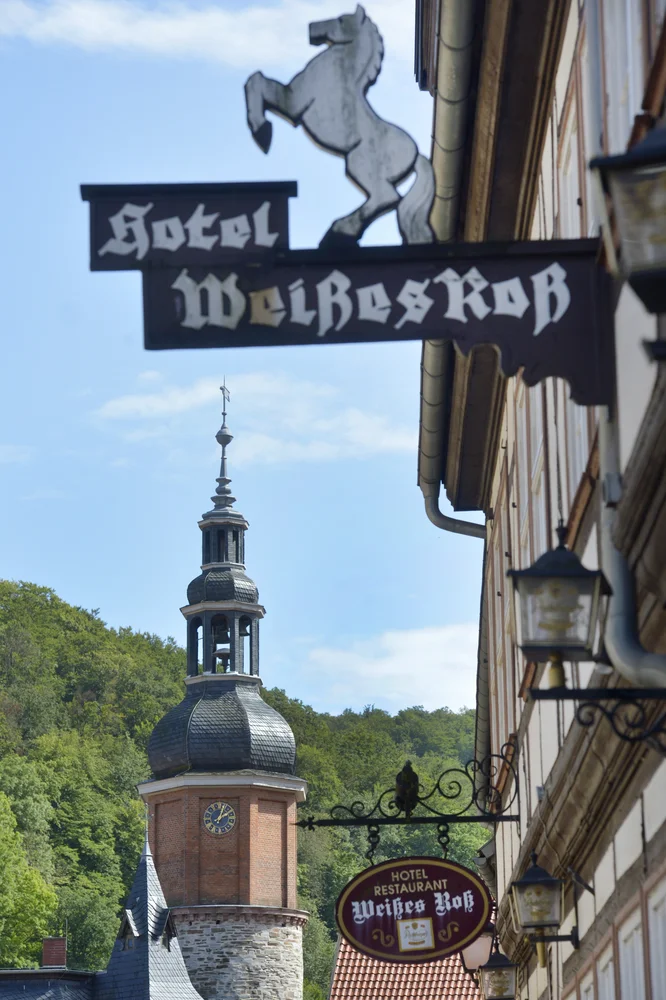
The evening in Stolberg. The town is quiet. The last coaches and cyclists have left. Any remaining tourists are sitting in the hotels. But a light can still be seen in one of the castle windows high above the town. Elke Franke – alias chambermaid Sophia von Habenichts – is “smuggling” a group of visitors from the castle courtyard through the magnificent gate and showing them the unusually shaped chapel, the staircase and the corridor with the impressive frescoes. She tells stories about the castle that range in tone from saucy to political.
The castle has always shaped the history of the town and has even played a role in world history. In 1506, Juliana zu Stolberg und Wernigerode was born here. An appealing statue on the castle terrace shows Juliana, who later became the matriarch of the House of Orange, as a delicate young girl. The chambermaid Sophia tells the visitors the story of Juliana and her family and the subsequent and current owners of Stolberg castle.
It is now owned by the Deutsche Stiftung Denkmalschutz, a private initiative for the preservation of Germany’s cultural heritage, which bought the building as a ruin in 2002 and restored to its former glory at great expense. Now the organisation has leased the building and it is destined to become a hotel. This will give the town of 1100 people almost 1000 guest beds.
Night-time in Stolberg. Now it becomes obvious what is different from other similar towns: no satellite dishes, no illuminated advertising, no election posters. There are no spotlights on the tourist venues. Only street lamps light the roads and the facades of the buildings. The bell in the Seigerturm rings. People are coming out of only one door in the market place and they are theatregoers. They have been to the AndersweltTheater, which is run by Christiane and Mario Jantosch.
Three or four times a week, the two artists open their café and the small theatre on the floor above it. Sometimes they put on a comedy and sometimes a thought-provoking literary work, always accompanied by an appropriate menu. First-time visitors are amazed to see that Christiane and Mario Jantosch appear first in the kitchen and behind the bar and then later on the stage. Some lucky guests will have the chance to see them perform with 50 other residents of Stolberg in the Müntzer project. This play tells of the life, battles and death of the town’s most famous son.
What is normal in Stolberg is that everything happens in the half-timbered buildings: in the museum, the town hall, the guest house, the theatre. Everywhere you hear stories of the blessings and curses of this style of building and of how much sensitivity and inventiveness is needed to live in these old houses.
-
Tourist-Information Stolberg (Harz)
Niedergasse 17, 06536 Südharz | OT Stolberg (Harz)Phone: (034654) 454
Fax: (034654) 729
Mail: ti@rossla.de
Sie auch interessieren:
