

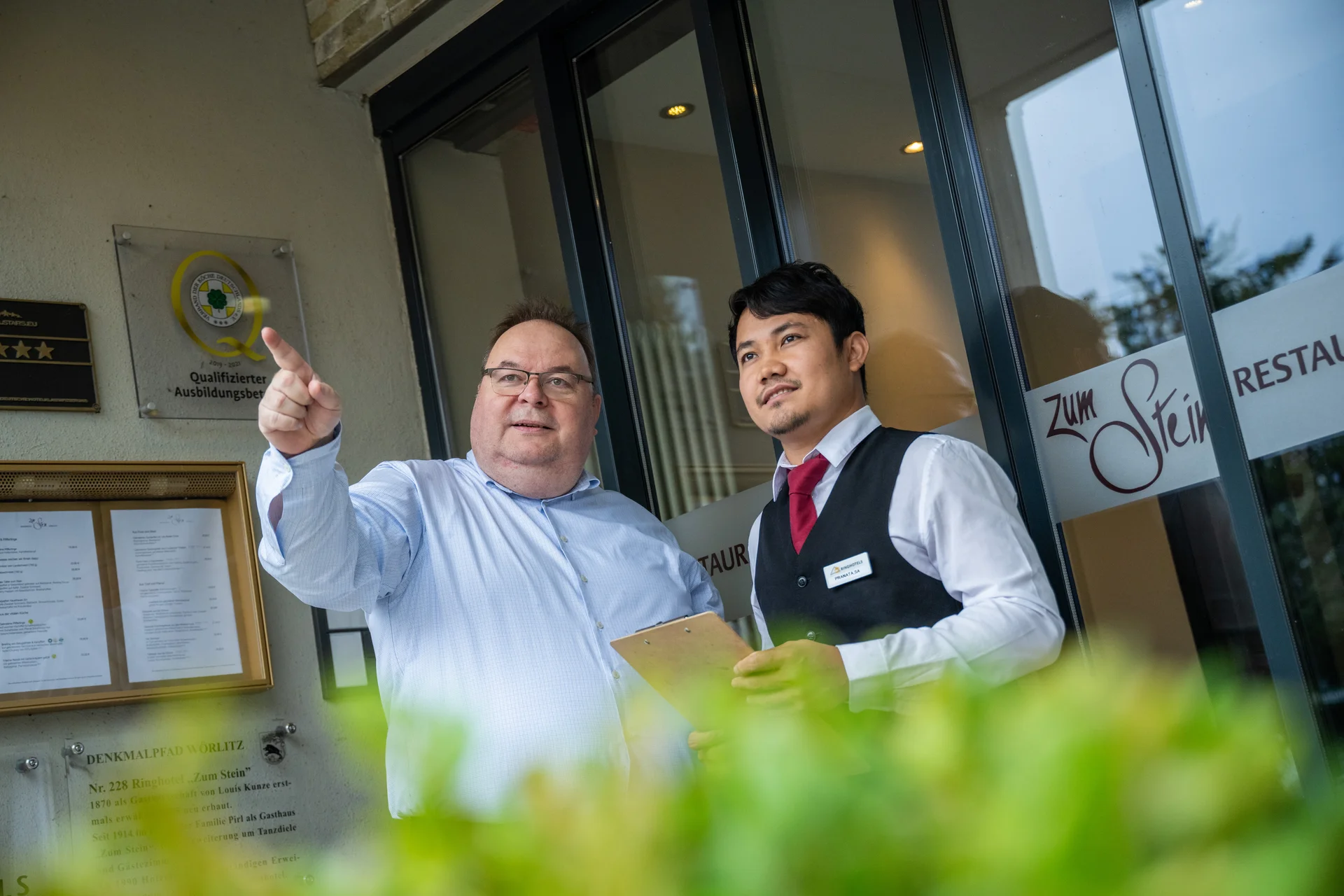
A beautiful working environment The Ring Hotel “Zum Stein” is set in the cultural landscape of the Garden Kingdom of Dessau-Wörlitz, which is a UNESCO World Heritage site. If you are looking for peace and relaxation, you will find it in the woods by the riverside, along the avenues and dikes and in the meadows and also in the hotel with the wellness spa on the outskirts of Wörlitz. The family-owned hotel offers employees the opportunity to work in a breathtaking setting. But nowadays, this on its own is not enough to attract and retain staff, Michael Pirl explains. The hotelier with his family business is one of many entrepreneurs in Saxony-Anhalt who want to highlight the fact that the region is a rewarding place to work.
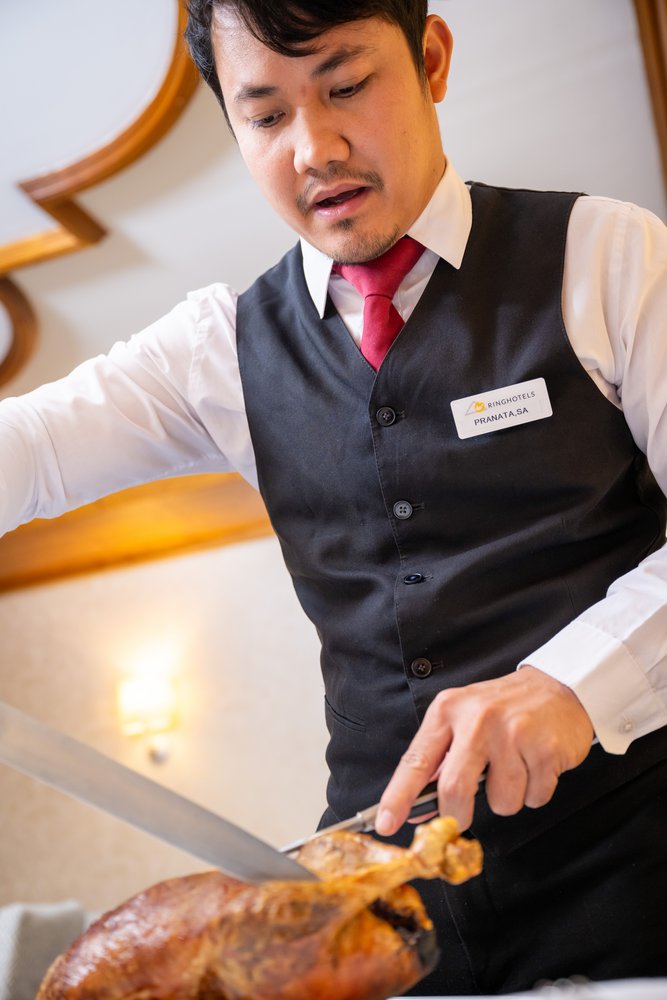
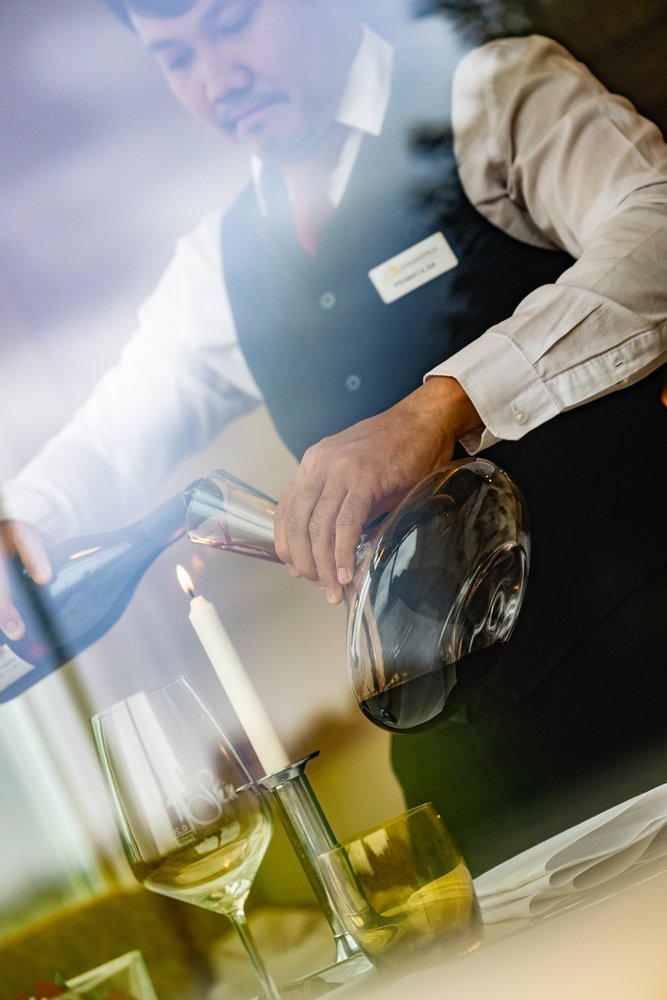
Sumantrie knows the Ring Hotel “Zum Stein” like the back of his hand. He also knows all the staff, the area and the regular guests. That’s how it is when you have worked somewhere for six years. When he arrived in 2017, Sumantrie had not heard of the UNESCO World Heritage site that attracts tourists to the area. He knew nothing about the Germans and was certain that he would never learn the language. He arrived in Wörlitz from Indonesia and remembers that initially he really struggled with homesickness. Today, this peaceful man is a popular employee and his skills are highly valued in the restaurant.
When we ask him why he feels at home in this region — so far from where he grew up, he talks a lot about his work and his house in Dessau. “We both enjoy living here,” says Sumantrie. He brought his wife to Germany when he “could imagine staying here permanently.” He did stay and accepted a job immediately after finishing his training. His child was born in Germany and, as he explains, his home is not only Indonesia: “It’s also here.” Michael Pirl is pleased to hear it. “That is integration at its best.”
“We need to change course.”
(Kopie 3)

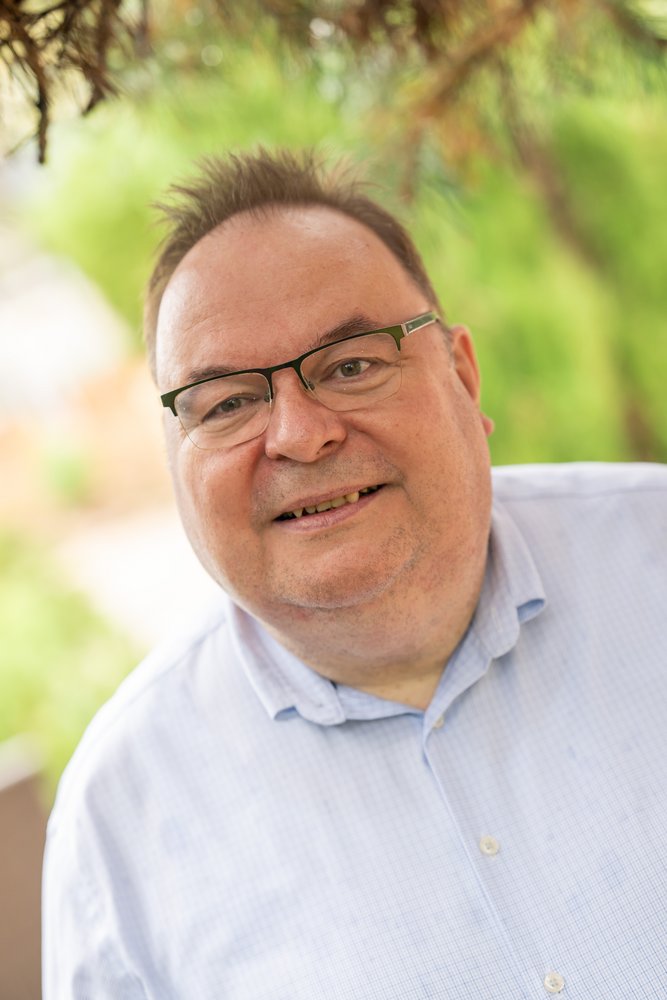
And that is what they are investing in here in Wörlitz. Michael Pirl, who manages the Ring Hotel together with his brother, is a man of his word. He does not look like someone who would be easily scared off. He takes the challenges involved in running a prestigious hotel in his stride. The two brothers are the fourth generation of the family to manage the hotel, which was opened in 1914. Several different forms of government and currencies have come and gone since then and there has been political, economic and social upheaval. “Every generation has had its own hurdles to overcome,” says Michael Pirl.
The difficulty that he and his brother are currently facing is an acute shortage of staff. While other people are only just becoming aware of the problem, he has seen it coming for years. “Just after the collapse of Communism, we realized for the first time that the situation could get serious,” he remembers. “When the Berlin wall fell, many young people wanted to see more of the world and decided to settle down and start a family somewhere else.” One of the long-term consequences is only being felt now, about 20 years later. There is a shortage of apprentices and trainees in the Anhalt-Dessau region. Demography is not rocket science, as Michael Piri explains. The alarm bells should have been ringing for some time. “We need to change course,” was both the cry and the mantra at the time.
The world is coming to Wörlitz.
What the energetic hotelier predicted would happen is now becoming a reality. Many industries are looking for employees. Pirl, who knows the hospitality sector well, believes that a trend, which began gradually, will soon start to really take off. As the treasurer of the Hotel and Restaurant Association of Saxony-Anhalt and the Tourism Association of the World Heritage Region of Anhalt-Dessau-Wittenberg and as the Vice President of the Chamber of Industry and Commerce of Halle-Dessau, he has his ear to the ground. And what he is hearing is sobering. Finding employees is difficult for all types of businesses, but in the service sector things are particularly tough. When it comes to shift work and working on public holidays and weekends, “You really have to want to do it,” says Pirl.
(Kopie 6)
In the Ring Hotel, there is another factor in play. Although the area is very attractive for tourists and visitors, many people prefer to work in cities, Pirl explains, referring to the urban/rural divide.
Around 15 years ago, the two brothers began to change course. They introduced a whole catalog of measures, developed new networks, enhanced the hotel’s unique selling points, used web portals and, most importantly, began thinking outside the box. “It’s a simple equation,” says Pirl. “We can only maintain the quality of our service if we have good employees. If we don’t start looking for staff in other countries, we will have problems.” The two men began investigating ways to hire employees from outside Germany. That's when they found “MobiPro.” It is a program launched by the German federal government for the “Promotion of Vocational Mobility of Young People Interested in Vocational Training” and their initial experience with it was good. Two of the apprentices from that time are now permanent members of the hotel staff.
The hotel owners have been working for years with agencies that specialize in recruiting potential trainees, first-time employees and specialized staff. They have made a name for themselves and word has got around that Saxony-Anhalt is a good place to work. The world is coming to Wörlitz. The hotel’s current multicultural team has not been thrown together, but has grown together. The restaurant employees, massage therapists, kitchen staff, room attendants, chefs and dishwashers come from 11 different countries. The apprentices in the kitchen and those on the service team have come from Vietnam, India and Indonesia to work in the hotel in Saxony-Anhalt.
(Kopie 9)
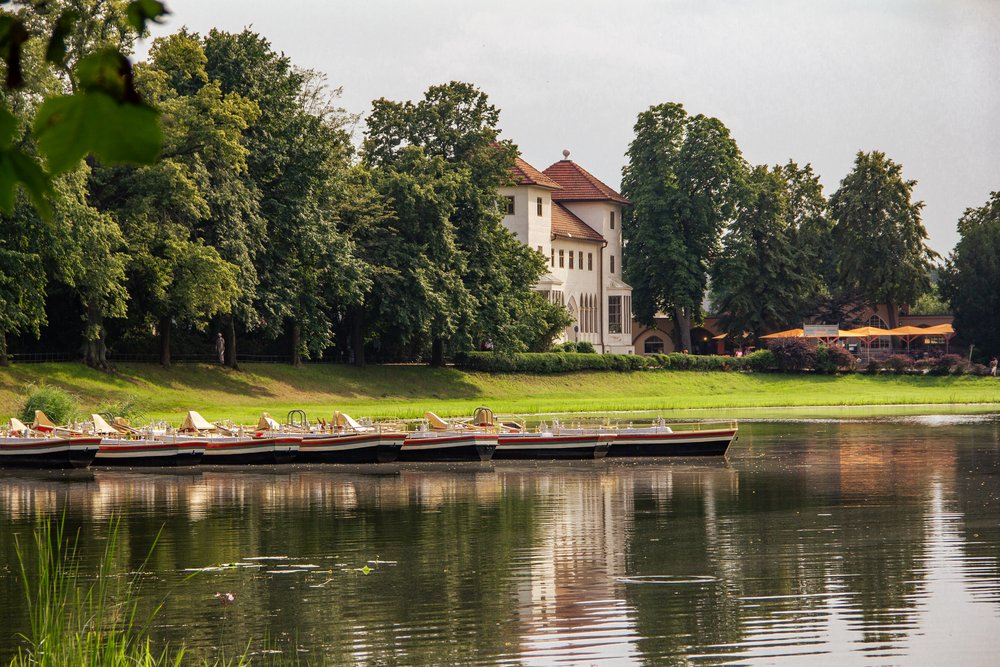
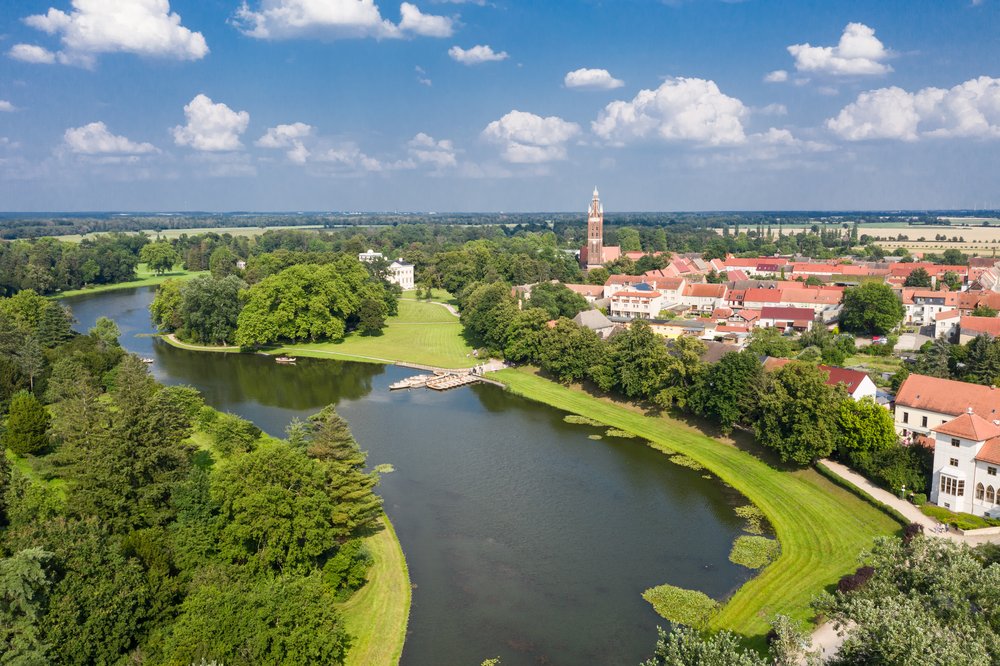
More than 80 employees look after the guests in the Ring Hotel “Zum Stein,” which has 86 rooms and a large spa area. It is also well known for its exquisite cuisine. And in addition, the hotel runs the “Küchengebäude,” a restaurant at Wörlitz Palace. The hotel’s catering service is used by many of the events that take place in the Garden Kingdom and visitors who decide to take a gondola ride on the canals in Wörlitz Park often have the chance to enjoy the delicacies from the hotel kitchen. The hotel also provides food for outings, day trips and cultural events.
Everyone has become more open.
The Ring Hotel makes living and working in Saxony-Anhalt attractive for employees from other countries in a number of ways. The hotel has a friendly atmosphere and offers a variety of opportunities, plus the managers are easy to talk to. The German employees welcome the additional help and the new ideas from other cultures, as Michael Pirl says. He talks a lot about integration and explains that it is not only how you work here that it is important, but also how you live. There are 20 furnished apartments available in Wörlitz for workers from outside Germany. New employees are given help with getting to know the area, joining local clubs and bringing family members to join them.
(Kopie 12)
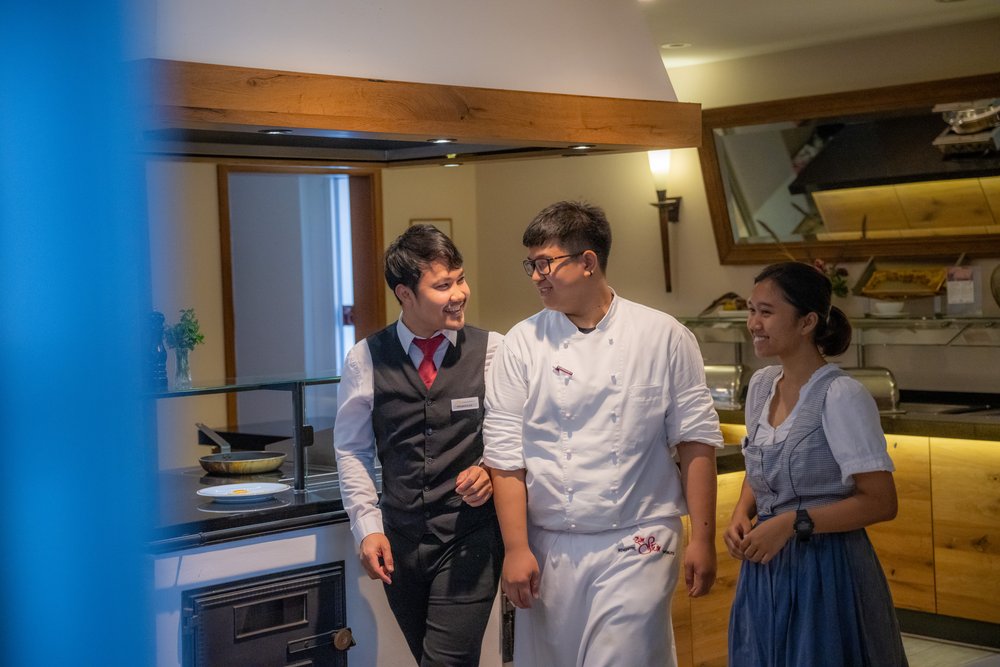
Michael Pirl is a highly talented man. He is well known throughout the area and uses his contacts to help employees’ relatives, for example by looking for suitable jobs in other industries. He says that he has become more open and his horizons have broadened. Like everyone in the hotel, he has become familiar with other customs. The only people who are not welcome are those who do not respect fundamental rights, such as gender equality. He values individuality and wants to continue on the path of integration. He says, “The way we live together will change completely and we will soon have a truly multicultural society in Germany.” The Ring Hotel “Zum Stein” is a good example of how that can work. In the future Michael Pirl expects to employ “many more people from outside Germany” at his hotel. “The skill lies in really bringing everyone on board.” Anyone who watches Sumantrie working in the restaurant will know exactly what he means.
Author: Manuela Bock
Sie auch interessieren:
