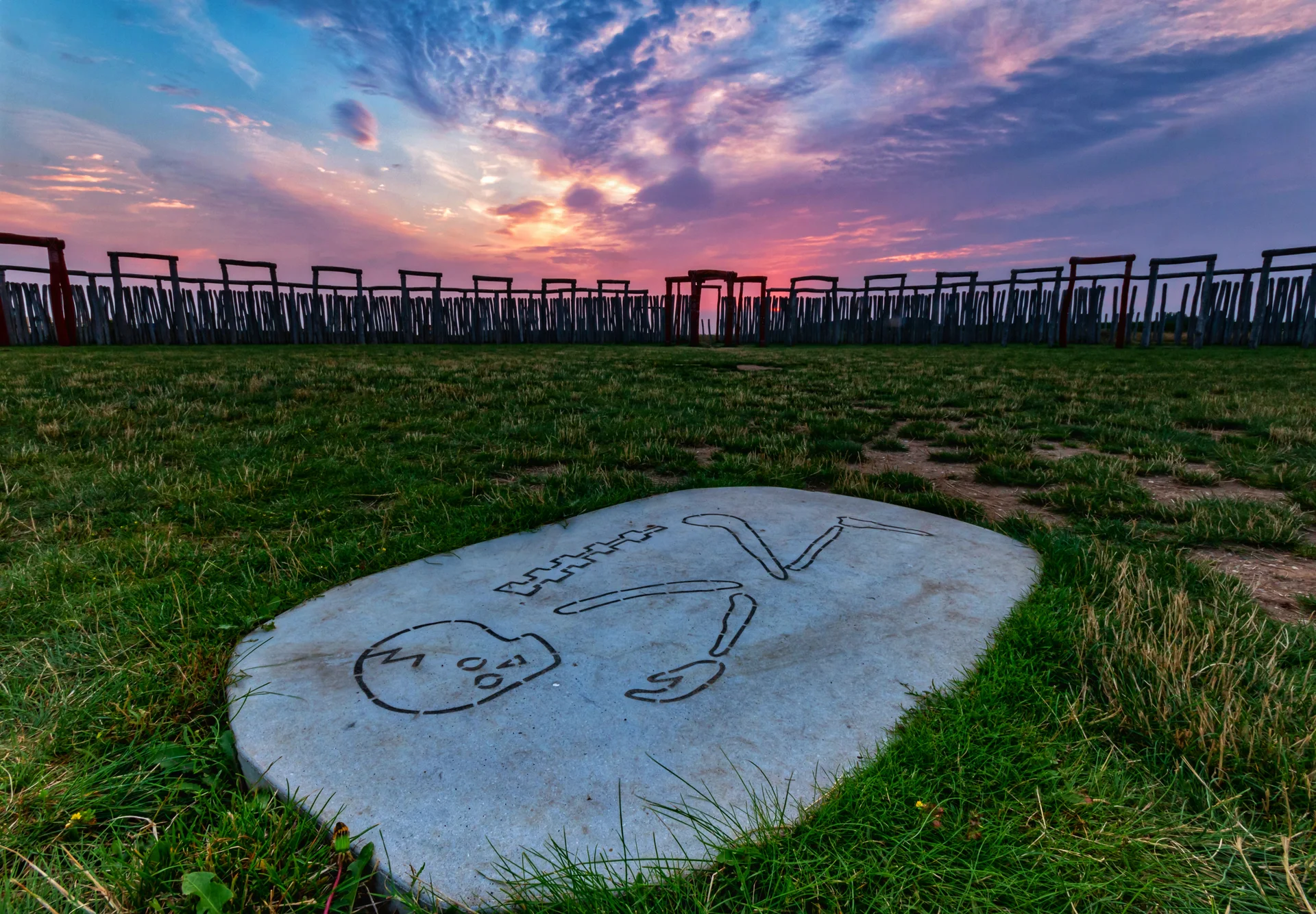
Tourists used rarely to be seen in the small village of Pömmelte in Saxony-Anhalt, which lies not far from the regional capital Magdeburg, until archaeological excavations in the early 2000s catapulted it into the headlines. The archaeologists discovered a circular ditch structure dating back 4300 years that has now been reconstructed and provides insights into Neolithic culture. The Pömmelte Woodhenge is the German counterpart of Stonehenge.
(Kopie 2)
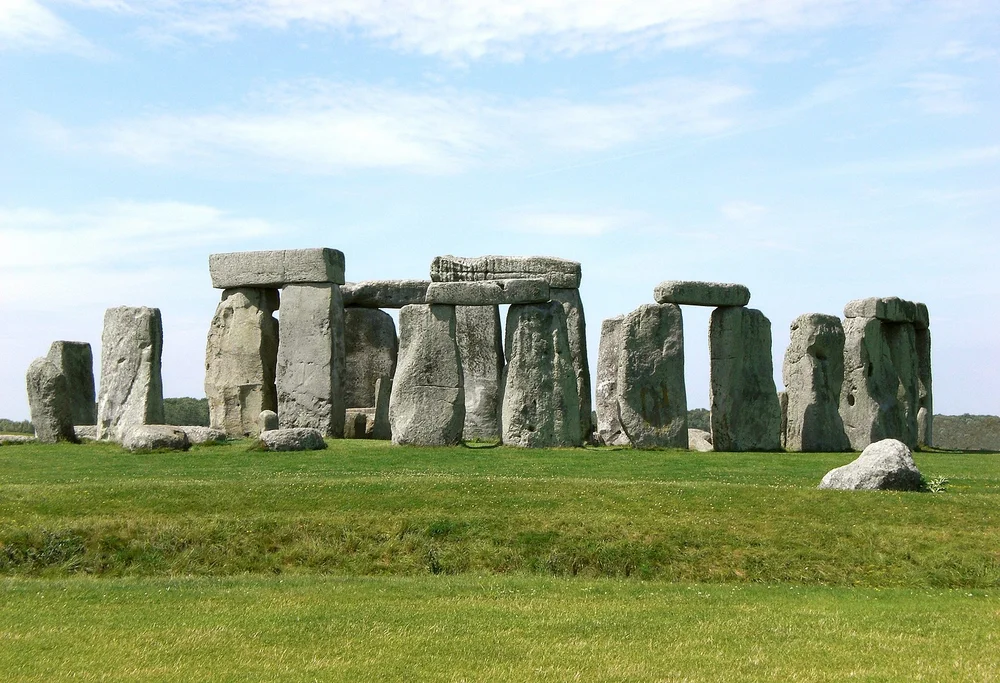
The celebrations of the summer and winter solstices at Stonehenge are major events that involve thousands of visitors greeting the rising sun with drumming and dancing. As well as tourists from all over the world, the great Stone Age monument on Salisbury Plain in southern England also attracts mystics and New Age druids.
The stone circle, which is around 4600 years old, is now a World Cultural Heritage site. It has mystified archaeologists for centuries and still no one is entirely certain what purpose it was intended for. Stonehenge could have been a place of healing, an astronomical observatory or a burial site. In a world where there are fewer and fewer mysteries and where apparently everything can be explained, it is perhaps the unanswered questions that give monuments of this kind their magical attraction.
Spiritual forces and ritual sacrifices
The Pömmelte Woodhenge in Saxony-Anhalt also has a magical appeal. It attracts cultural tourists and also casts its spell over spiritual people and seekers. On this afternoon in early autumn, a man with his eyes closed is sitting cross-legged on the ground between the circles of wooden posts. He is obviously deep in meditation. Many people come here for the silence, while others drum and dance wearing flowing robes and spread apples or grains of corn on the ground. For them, this site set amongst arable fields is a holy place, a place of power. They can feel a special energy here, the connection of the earth with the cosmos.
The older man from the Salzland Museum in Schönebeck who is welcoming the visitors strolling across from the car park and offering them a one-hour guided tour is relatively uninterested in esoteric or spiritual ideas. "But I do come here sometimes in the evening with my wife and play Pink Floyd tracks in the centre of the circle. That's rather special," he admits with an enthusiastic smile.
(Kopie 4)


The folder under his arm reveals that he is interested in the Woodhenge for quite different reasons. It contains pictures of the finds which archaeologists have made during their excavations here and which demonstrate the cultural and historical importance of the site. They include bones, skulls, tools, weapons and shards of pottery. "The pottery found during the digs and the typical vessel shapes are from the Bell Beaker culture and the Únětice culture," he explains.
It is assumed that towards the end of the Neolithic period and at the start of the Bronze Age people celebrated rituals here and ate and drank together. The skeletons which have been found suggest that human sacrifices may have been made. One thing is certain: the Woodhenge was used as a religious site for around 300 years.
The Stonehenge of the Börde region
The comparison with Stonehenge is not merely a tourism marketing gimmick. It is completely legitimate. The Woodhenge was created at around the same time, was also built by Bell Beaker people and has almost the same diameter and structure as the English site. In addition, the entrances are aligned with the position of the sun at midsummer and midwinter, as they are at Stonehenge. But the monument at Pömmelte consisted not of huge stones, but of thousands of wooden posts.
These have been reinstated and the mysterious ritual site on the flat land of the Magdeburg Börde region not far from the river Elbe has been reconstructed in its original location. More than 4000 years ago, this was the cultural and spiritual centre of the region.
(Kopie 6)

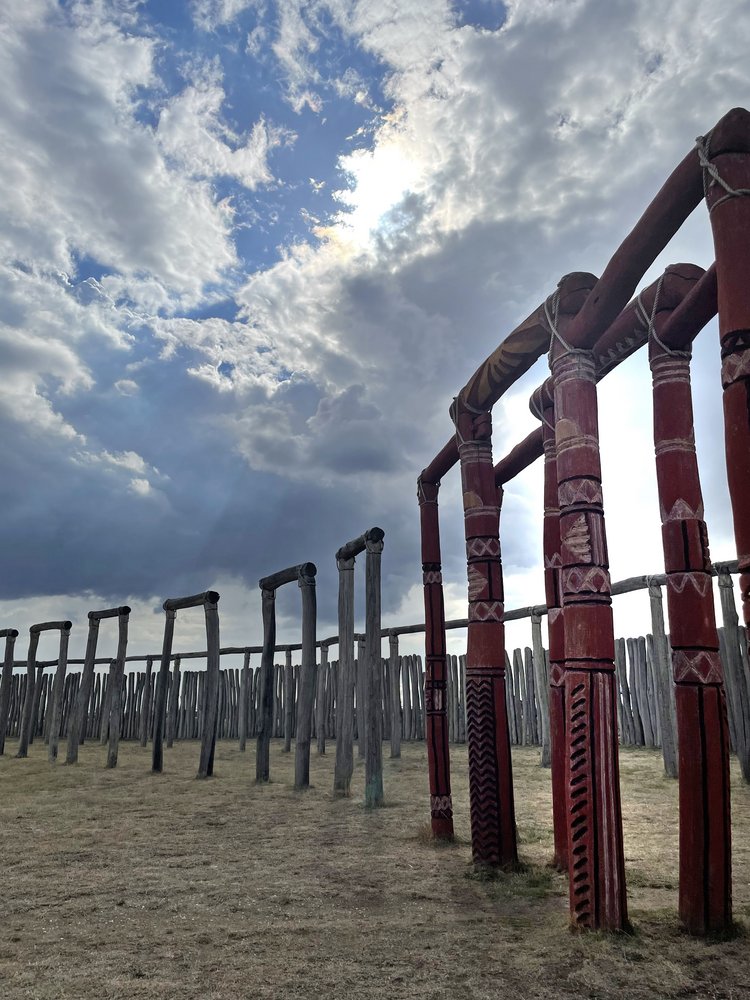
The restored Woodhenge, which opened on the summer solstice in 2016, is impressive. It consists of seven rings that include palisades, ditches and ramparts and has a total diameter of around 115 metres. If you stand in the centre of the circles and speak or sing, you will discover a special acoustic effect, the so-called flutter echo. The priests could be heard everywhere through the outer palisade fence, which is relatively thick, when ceremonies, festivals or ritual sacrifices took place.
The history of the rediscovery of the site is equally interesting. In the 1960s and 1970s, some pilots from nearby Schönebeck noticed a dark circle in the fields between Pömmelte and Zackmünde as they flew overhead. The corn grew differently in this area. At first, no one could explain why this was. It was not until 1991 that Otto Braasch, a famous aerial archaeologist, identified a circular ditch structure with four paths through it and a palisade as he flew over the arable fields. The excavations that took place between 2005 and 2008 made it clear how complex the structure was.
Around 1800 Robinia trunks were later installed as part of the reconstruction. Their precise original locations had been identified during the excavations. As the posts had been burned when the site was abandoned, there were dark patches in the earth which the archaeologist Dr André Spatzier and his colleagues used for guidance. Today, some of the posts are painted and decorated with carved symbols and patterns. Obviously, no one knows what they originally looked like.
(Kopie 8)

A stop on the Sky Paths
The reconstructed site, which is now known as the Pömmelte Woodhenge, is part of the Sky Paths archaeological tourism route. This also includes the Arche Nebra, where the Sky Disc was found, and the Goseck solar observatory. Just over 200,000 people have visited the Woodhenge since it opened.
A visitor centre is being built next to the car park, which has turned this area into a building site. Behind the viewing platform, the excavation holes have been filled, because the work at the site is temporarily finished. The area around the Woodhenges in Pömmelte and Schönebeck (where there was a similar site) was home to the largest early Bronze Age settlement in central Europe.
The well-preserved floor plans of more than 140 houses have been identified. In the summer of 2022, the archaeologists made some more astonishing finds. They discovered an oven pit and a row of graves that is more than 4000 years old. "At least 15 full-sized graves from the early Únětice culture are lying in a row like a string of beads," explains the project leader, Dr Franziska Knoll from the State Office for the Preservation of Historical Monuments and Archaeology in Saxony-Anhalt.
(Kopie 10)
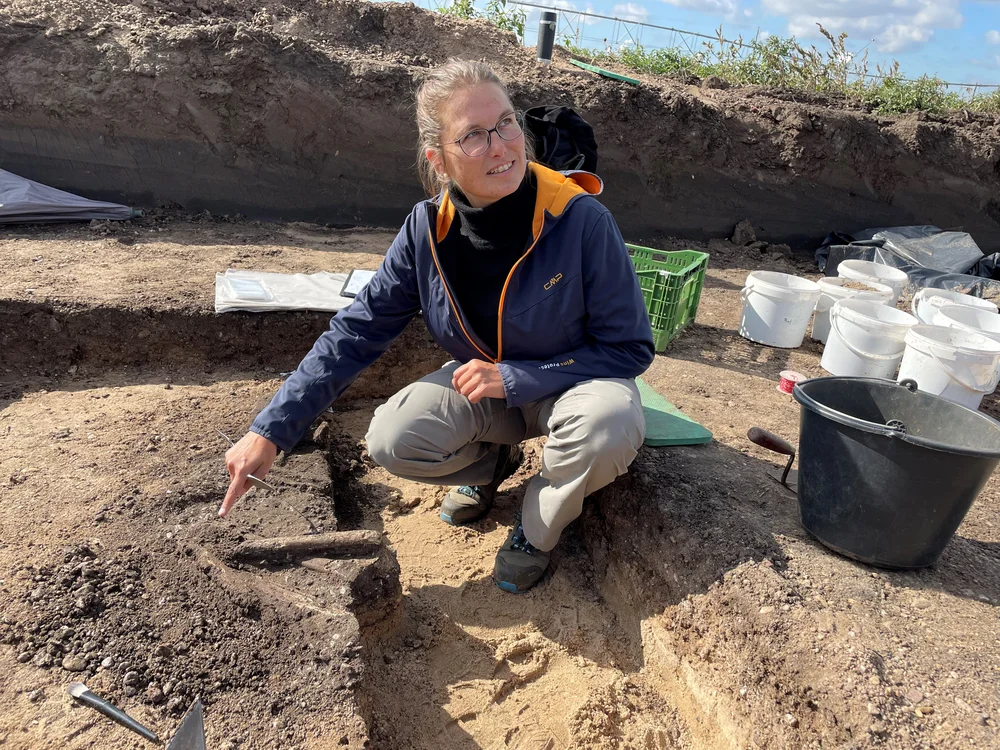
When we asked her if she felt a fascination for the site, she said: "I need to divide my feelings into three parts. Firstly, it is a special emotional experience for me to stand in the reconstructed circle. Secondly, I am fascinated by the burial site, because several cultures come together here and we have found many special features that we will be investigating further over the years to come. Thirdly, I am inspired by the fact that the new visitor centre will be the first substantial modern rammed earth building in central Germany."
Contemporary architecture and a traditional building method that was thought to be long forgotten have been combined. History is still being written in Pömmelte today.
more information: Home - Himmwelswege (himmelswege.de)
Sie auch interessieren: